
Last updated November 15, 2026
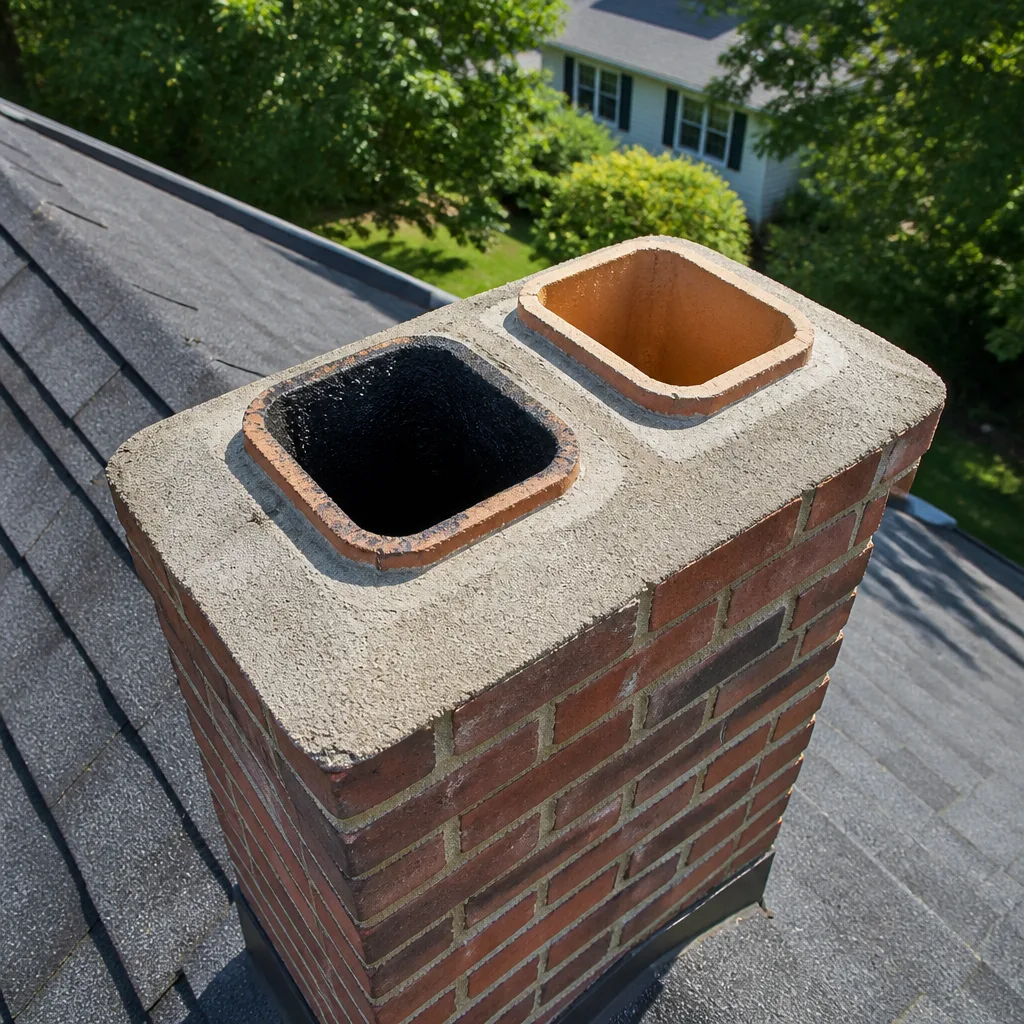 Sweep & inspection
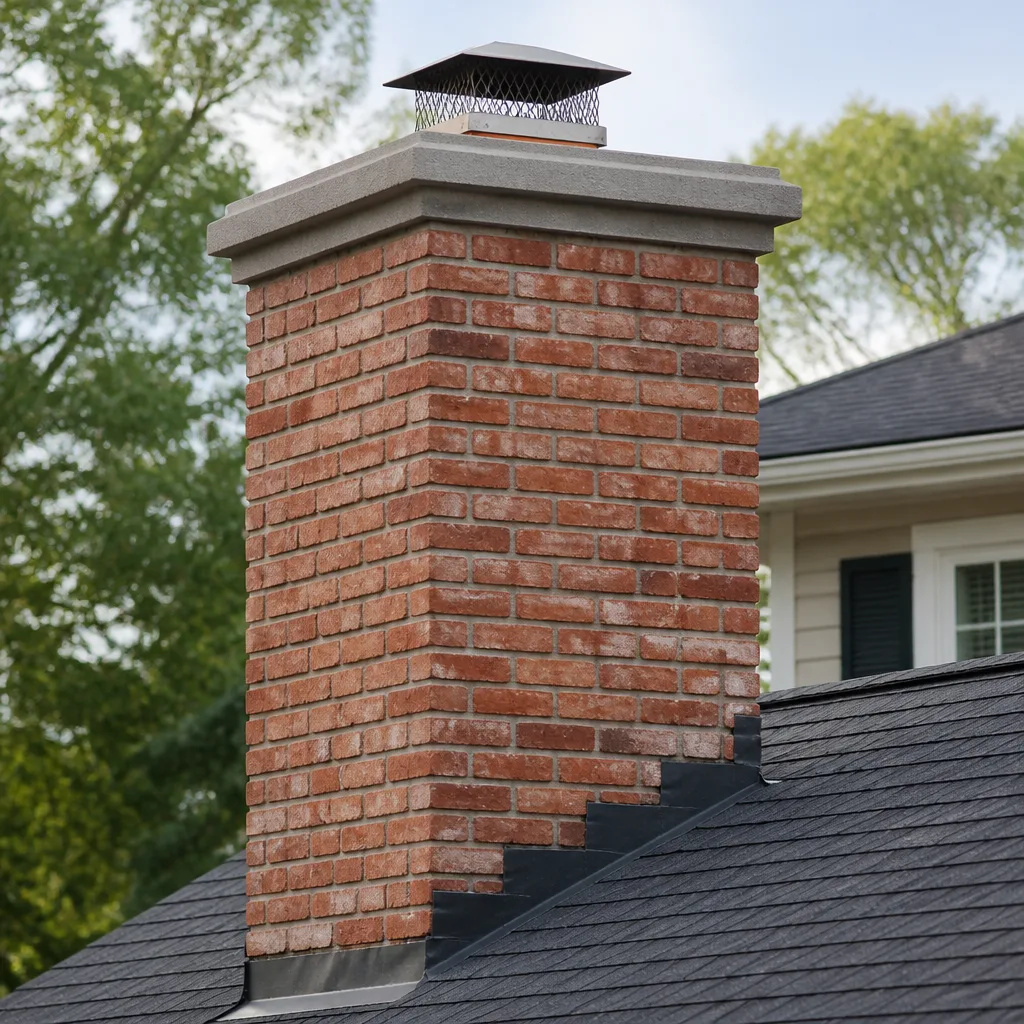 Caps & crowns
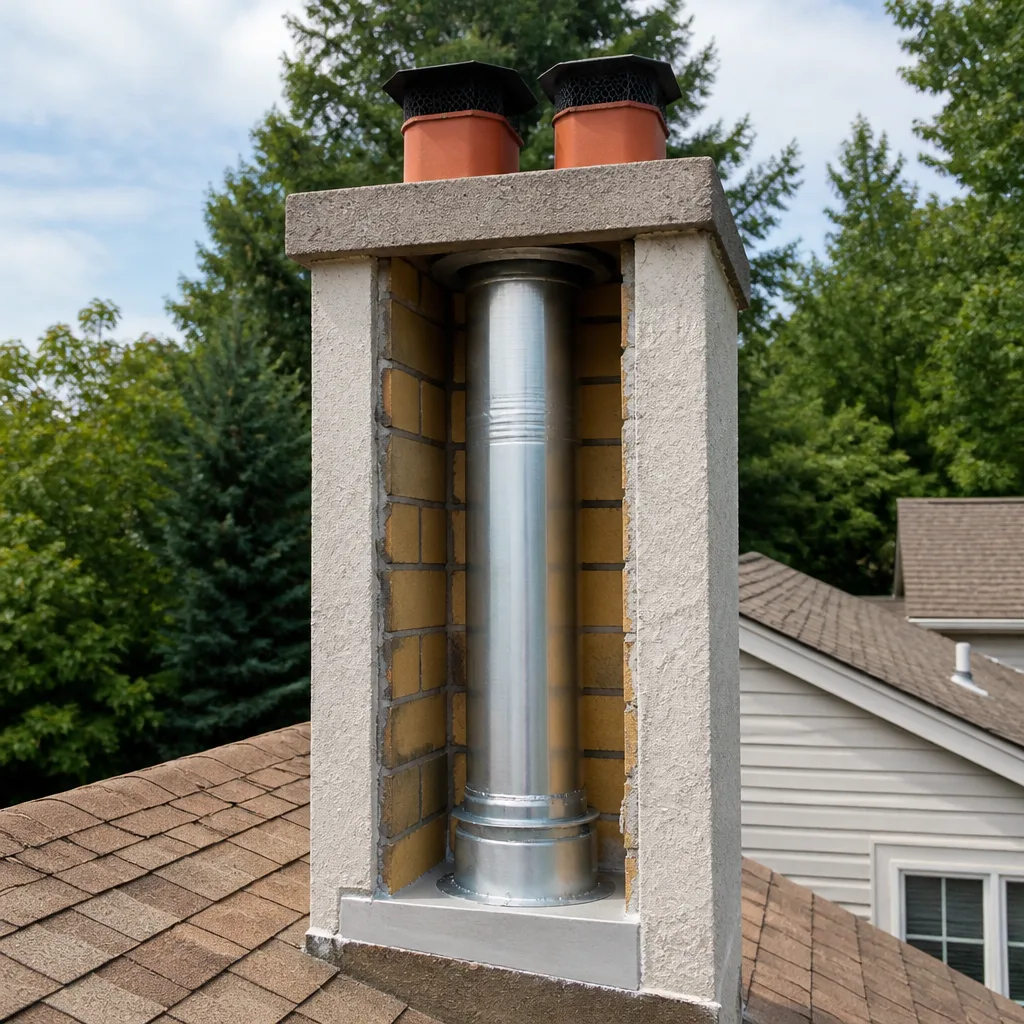 Flue relining
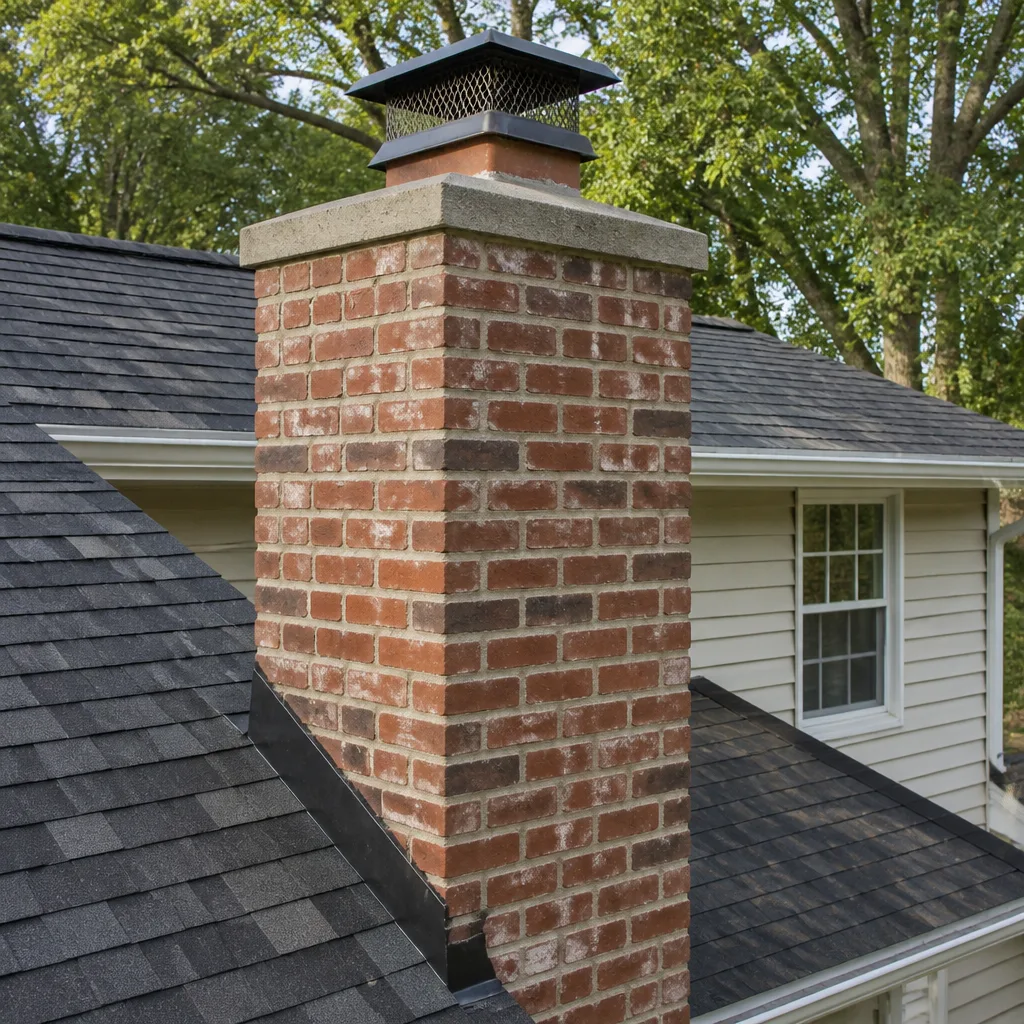 Masonry repair
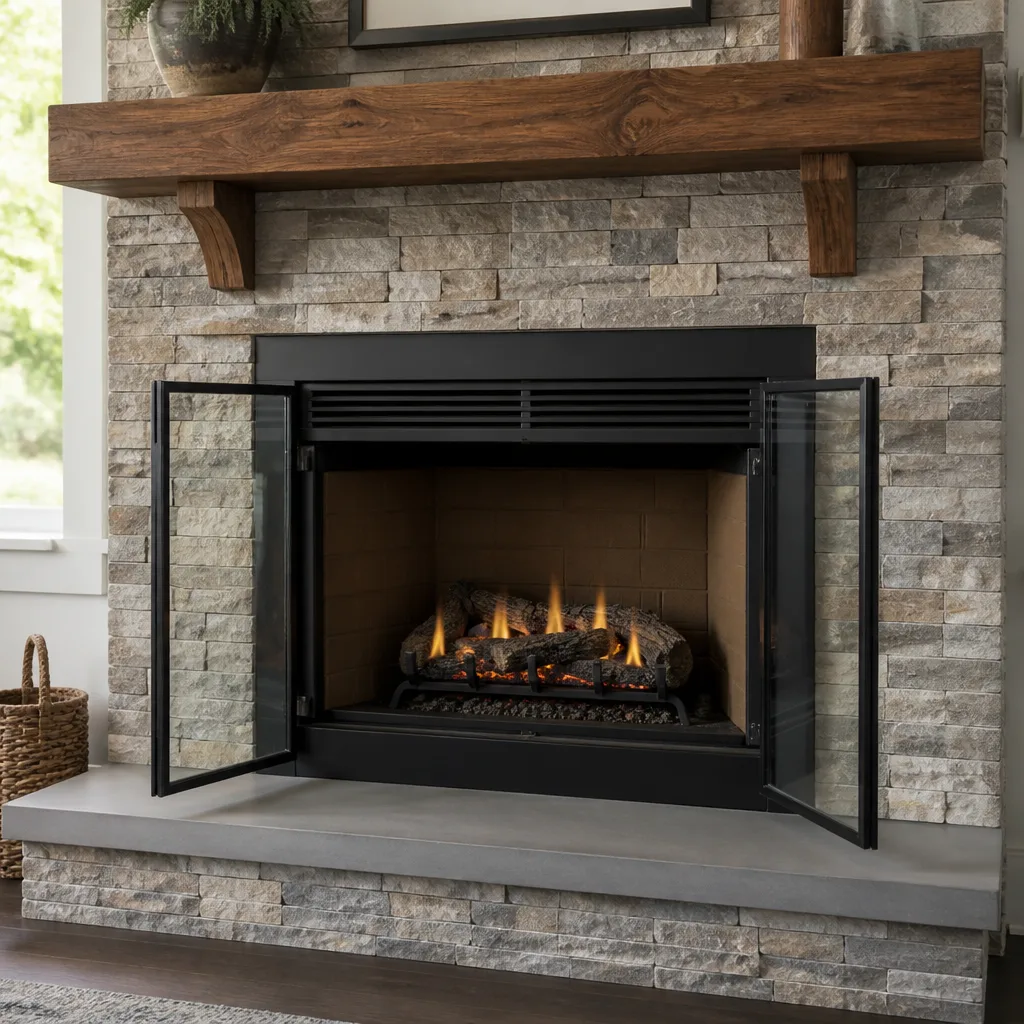 Gas fireplace service
Level 1 sweep and inspection to the NFPA 211 annual standard - flue, crown, cap, and flashing checked and photographed
Chimney sweep logs do not sweep chimneys. They loosen some creosote - which then falls where a brush and vacuum still have to collect it.
DIY vs Professional Chimney Cleaning: The Fishers Homeowner’s Decision Guide
You can buy the same brushes a sweep uses. What you can’t buy at a hardware store is the ability to identify a cracked liner flue tile from inside a firebox, and that’s where the real risk lives. Most homeowners who clean their own chimney do a decent job on the soot they can reach. The problem is what they can’t see: a hairline crack in a flue tile, a crown that’s pulling away from the masonry, flashing that’s quietly letting water into the chimney structure. This guide walks through what DIY cleaning can legitimately accomplish in a Fishers home, what genuinely requires professional equipment, and how to decide which approach fits your fireplace, your budget, and your tolerance for the unknown.
Quick Answer
DIY chimney cleaning can handle light soot and stage-1 creosote on the accessible sections of the flue, which is real work and worth doing. But it cannot assess liner integrity, crown condition, or flashing failure, and those three things are where chimney fires and water damage actually start. For most Fishers homeowners, the smart play is professional annual inspection and sweeping, with light DIY upkeep in between if you’re comfortable with it. Call (844) 761-5757 for a free estimate.
Styles & brands we work with
- Sweep & inspection
- Caps & crowns
- Flue relining
- Masonry repair
- Gas fireplace service
Table of Contents
- What DIY Chimney Cleaning Can Actually Accomplish
- What Genuinely Requires Professional Equipment
- Liability and Insurance: What Happens After a Chimney Fire
- The Cost-Benefit Math of DIY vs Professional
- The Hybrid Approach: DIY Between Professional Visits
- Fishers-Specific Considerations: Climate, Housing, and Burning Season
- How a Professional Sweep and Inspection Actually Works
- A Decision Framework for Fishers Homeowners
What DIY Chimney Cleaning Can Actually Accomplish
A chimney brush, a shop vacuum with a HEPA filter, and a set of rods will remove loose soot and light, flaky creosote from the straight sections of flue you can reach from the firebox or the roof. That’s not nothing. Stage-1 creosote, the flaky, powdery stuff that accumulates after a season of normal burning, does come off with a brush. If you burn dry, seasoned hardwood and get your chimney swept annually, most of what you’ll find on the accessible flue walls is stage-1, and a homeowner with the right tools and some patience can knock it back.
Here’s what a DIY cleaning covers well:
- Loose soot on the firebox walls, damper, and the flue sections directly above the smoke chamber.
- Flaky stage-1 creosote on straight, accessible flue runs.
- Ash and debris in the firebox and ash pit.
- Visual checks from the firebox of the smoke shelf and damper operation.
What it does not cover: the flue sections above a smoke chamber offset, the underside of the crown, the top of the chimney where water enters, or the condition of the liner tiles themselves. In a typical Fishers home built in the 1990s or 2000s, the flue often has an offset at the smoke chamber, which means the brush you’re pushing from below never reaches the upper third of the chimney. You’ll feel like the job is done because the firebox looks clean. The flue above the offset may not be. For a full assessment, a professional chimney sweep uses rotary equipment that follows the flue’s actual geometry.
The honest framing is this: DIY cleaning reduces some surface buildup. It does not reduce risk in any way you can verify, because you cannot verify what you cannot see.
What Genuinely Requires Professional Equipment
Three tasks separate a homeowner with a brush from the work a chimney specialist performs: rotary cleaning of stage-2 and stage-3 creosote, camera inspection of the liner, and pressure or smoke testing to confirm the flue is sealed. None of these can be replicated with consumer tools, and each one addresses a failure mode that brushing alone won’t touch.
- Rotary cleaning for stage-2 and stage-3 creosote. Stage-2 creosote is the hard, shiny, tar-like glaze that forms when a fire burns cool or the wood is damp. Stage-3 is the puffy, concentrated deposit that’s essentially one spark away from ignition. A hand brush will skate over stage-2 and do nothing to stage-3. Rotary cleaning systems use spinning chains or whips that remove the deposit from the flue wall without damaging the tile. This is the single biggest gap between DIY and professional cleaning, and it’s the gap that matters most for fire risk.
- Camera inspection for liner cracks. A borescope or chimney camera run down the flue shows the inside of every tile joint. This is how you find a cracked tile, a displaced joint, or a gap where the liner has pulled away from the smoke chamber. No amount of brushing from below reveals this. In a Fishers home where the chimney is 20 or 30 years old, tile cracks are common and often invisible from the firebox.
- Pressure testing or smoke testing. These tests confirm the flue is actually sealed from the house. A cracked tile or an unsealed joint can let combustion gases, including carbon monoxide, migrate into living space rather than up and out. A brush pass tells you nothing about this. A test does.
There’s a fourth item worth naming: crown and flashing inspection from the roof. The crown is the concrete cap at the top of the chimney. When it cracks, water gets into the masonry, freezes, and expands. Fishers gets enough freeze-thaw cycling in a normal winter that a cracked crown turns into spalling brick and a failed liner within a few seasons. Flashing, the metal where the chimney meets the roof, fails in the same way. Both are visible only from the roof, and both are the kind of thing a homeowner standing in a firebox will never see.
Liability and Insurance: What Happens After a Chimney Fire
If a chimney fire happens and your insurance company asks for proof of maintenance, what do you have? A receipt for a brush from the hardware store isn’t the same as a professional inspection on record. This is the part of the DIY conversation that never shows up on the how-to videos, and it’s the part that can cost the most.
Most homeowner policies cover chimney fires as a sudden event, but the claim process often includes questions about maintenance history. An inspection report from a qualified chimney professional, dated and documented, is evidence that the chimney was maintained. A homeowner who cleaned their own chimney has no such record. In a disputed claim, that gap can complicate things in ways that are hard to predict.
There’s a second liability angle that matters more than the money: if you clean your own chimney and miss a cracked liner, and a fire later breaches that liner, the person at risk is everyone in the house. A professional inspection puts a second set of trained eyes on the thing you’re relying on to vent combustion gases out of your living room. In our experience, homeowners who’ve done the DIY route for a few years and then book a professional inspection are often surprised by what the camera finds. Not because they did anything wrong, but because the failure modes are invisible from where they were standing.
One note on scope: we can work with your insurer on documentation, but the inspection itself is the thing that matters. A dated report is what gives you something to point at.
The Cost-Benefit Math of DIY vs Professional
DIY cleaning saves the cost of a sweep. Professional cleaning costs money. The math seems obvious until you factor in what a professional visit actually finds, and what it costs to fix the things DIY missed after they’ve had a few more seasons to get worse. The genuine question isn’t whether DIY saves money on the sweep. It’s whether skipping the inspection saves money overall.
Here’s what the two paths actually deliver:
- DIY only: Saves the cost of a sweep. Leaves liner condition, crown condition, flashing, and stage-2 creosote unassessed. Any of those failing on their own timeline becomes a repair cost, often discovered at the worst possible time.
- Professional annual sweep and inspection: Costs a sweep every year. Catches the liner crack, the crown failure, the stage-2 glaze before it becomes a fire risk or a masonry repair. Documentation on record for insurance.
- Hybrid: Professional sweep and inspection annually, DIY touch-ups in between if you’re comfortable. Saves nothing on the professional visit but keeps soot from building up mid-season.
The repair costs that come from missed issues are where the comparison breaks down. A failed crown or a water-damaged liner is masonry and relining work. A stage-3 creosote deposit that ignites is a chimney fire. The homeowner who saved a few hundred dollars on a DIY sweep three years running may be looking at a repair bill many times that size for a problem a professional inspection would have caught while it was still minor.
That’s the cost-benefit math in its honest form: DIY saves on cleaning. It doesn’t save on assessment, and assessment is what protects the chimney. For a full picture of what professional service covers in this area, see our Fishers Chimney Sweep page.
The Hybrid Approach: DIY Between Professional Visits
There’s a middle path that makes sense for a certain kind of Fishers homeowner: professional annual sweep and inspection, with light DIY upkeep in between. It works when you burn wood regularly and want to keep soot from building up mid-season, or when you’ve got a straight flue with easy access and you’re comfortable with the tools.
Here’s when the hybrid approach is reasonable:
- You’ve had a professional inspection in the last year. You know the liner is intact and the crown is sound. You’re not cleaning blind.
- You’re only removing stage-1 creosote. Flaky, powdery deposits on the accessible flue sections. If you’re seeing shiny, tar-like deposits, stop and book a professional sweep.
- The flue has no offset or offset is accessible. Straight flues clean more completely from below. If the flue has an offset above the smoke chamber, DIY cleaning leaves the upper section untouched.
- You keep a record. Notes on date and what you cleaned, so the next professional inspection has context.
Here’s when it isn’t:
- Your chimney hasn’t been professionally inspected in over a year.
- You’ve had a chimney fire, even a small one.
- You’re seeing stage-2 or stage-3 creosote.
- You burn unseasoned wood or have a history of smoky fires.
- You’ve noticed water stains, efflorescence on the exterior brick, or a smell from the firebox when it rains.
When a professional sweep finds a liner problem, the repair conversation starts. A chimney repair scope might mean resurfacing a deteriorating flue with HeatShield rather than tearing it out for full replacement, or it might mean a DuraFlex flexible liner on a flue that’s too far gone for resurfacing. Both are professional-grade product lines certified chimney professionals nationwide rely on. The point of the hybrid approach is that you know which one you’re dealing with. DIY cleaning alone doesn’t tell you.
Fishers-Specific Considerations: Climate, Housing, and Burning Season
Fishers sits in central Indiana, which means real winters with freeze-thaw cycling, humid summers, and a burning season that runs roughly from October into March. Each of those factors shapes what your chimney is up against, and each one tilts the DIY vs professional decision a little differently than it might in a milder climate.
The freeze-thaw cycle is the big one. Water gets into a cracked crown or failed flashing, freezes overnight, expands, and pushes the masonry apart. A crack that would sit harmlessly in a milder climate becomes spalling brick and a failed liner after a few Indiana winters. Fishers homes are often on the newer side, which means chimneys from the 1990s and 2000s are now old enough that the original crowns are showing their first real cracks and the original liner tiles are showing first-generation wear. That’s exactly the window where a professional inspection catches the problem while it’s still a resurfacing job rather than a full reline.
On the burning-season side, the humidity matters too. Damp wood is the main cause of stage-2 creosote, and a humid Indiana summer means firewood stacked outdoors picks up moisture that doesn’t fully dry out before October unless it’s been split, stacked, and covered properly. Homeowners in Fishers who burn a cord or two a year often find more stage-2 glaze than they expect, and stage-2 glaze is exactly what a hand brush won’t remove. Get your wood covered, split, and stacked by spring, and you’ll have less of a creosote problem by fall.
One more local note: the burning season here means the ideal time to inspect is late summer or early fall, before the first fire. A Fishers chimney that gets checked in September has a clean winter ahead of it. A chimney that gets checked in January after the first creosote fire has a repair bill ahead of it. Season timing is genuinely part of the decision math.
How a Professional Sweep and Inspection Actually Works
A professional visit is not just a more thorough version of what you’d do yourself. The equipment and the sequence are different, and the sequence is designed so that the inspection happens around the cleaning rather than being an afterthought.
- Exterior and interior visual assessment. We look at the exterior chimney, crown, flashing, and the firebox before cleaning starts, so anything that shouldn’t be brushed or vacuumed gets flagged first.
- Drop cloths and vacuum setup. A HEPA vacuum at the firebox keeps soot out of the room. This is the part that makes a professional sweep noticeably cleaner than a homeowner with a shop vac.
- Rotary cleaning. The flue gets cleaned with rotary equipment sized to the flue, which removes stage-1 through stage-2 deposits from the tile wall. This is the part DIY can’t match.
- Camera inspection. With the flue clean, a camera run shows every tile joint, the smoke chamber, and the top of the flue. Cracks, gaps, and stage-3 deposits are visible in a way they aren’t from the firebox.
- Report and recommendations. Findings that need repair get explained with the camera evidence in front of the homeowner. Nothing is recommended without evidence you can see.
- Repair pathway. If the flue needs a resurface or reline, the work moves to HeatShield resurfacing for a deteriorating but intact liner, or a DuraFlex flexible liner for a flue that’s beyond resurfacing. Both are handled by the same chimney-only operation, so the inspection, the cleaning, and the repair aren’t three different contractors.
Our technicians have up to 14 years of experience, and the equipment they use is the industry standard for a reason. A brush pass that only removes what’s visible from below is a half-cleaning. The camera and the rotary head are what make the other half possible.
A Decision Framework for Fishers Homeowners
If you’re still deciding between DIY and professional, the honest framework comes down to four questions. Answer them in order and the decision usually makes itself.
Question 1: When was your chimney last professionally inspected? If it’s been more than a year, book an inspection before anything else. An inspection today is what tells you whether DIY cleaning is safe to attempt in the first place. Without it, DIY cleaning is guesswork.
Question 2: What kind of creosote are you seeing? Flaky, powdery, stage-1 deposits on accessible flue sections are within DIY reach. Shiny, tar-like stage-2 or puffy stage-3 deposits aren’t. If you’re not sure which you’re seeing, treat it as stage-2 and call a professional.
Question 3: How old is the chimney? A flue from the 1990s or 2000s has hit the age where liner cracks and crown failures are common. That’s the case for professional inspection regardless of what kind of cleaning you’re doing in between.
Question 4: Do you want a record? If you want documentation for insurance, or you’re selling the home, or you simply want to know the chimney is sound, a professional inspection is what produces it. DIY cleaning produces a clean firebox and nothing on paper.
The framework points the same direction for most Fishers homeowners: professional inspection and sweep annually, DIY upkeep between visits if you want it. That’s the hybrid model, and it’s the one that gets you both the savings and the safety. The homeowners who skip the professional side aren’t saving money on cleaning. They’re postponing a diagnosis they may not want to hear, and the chimney doesn’t care whether you wanted to hear it.
Common Mistakes to Avoid
- Cleaning without inspecting first. You don’t know what’s in the flue until someone with a camera looks. Cleaning before inspecting means you could be brushing past a crack that’s already failed.
- Assuming a clean firebox means a clean flue. The flue above the smoke chamber offset is often the part that never gets touched. The firebox looking good is not the same as the flue being clear.
- Using a hand brush on stage-2 or stage-3 creosote. A brush skates over hard glaze and does nothing to puffy deposits. If the firebox smells strongly of creosote or the deposit is shiny, stop and call a professional.
- Burning unseasoned wood because it’s what you have. Damp wood is the single biggest driver of stage-2 creosote. Indiana summers make outdoor firewood stacks damp, and wood that doesn’t dry before October costs more in cleaning and repair than seasoned wood costs to buy.
- Skipping the roof. Crown and flashing failures are the leading cause of water damage to Fishers chimneys, and they’re invisible from inside. A firebox-only check misses both.
- Ignoring a chimney fire because it was small. Even a small chimney fire can crack a tile or damage the liner. If there’s been a fire, professional inspection is not optional.
- Treating a DIY-cleaned chimney as inspected. Cleaning and inspecting are two different tasks. You can do one and not the other, and the one that protects the house is the inspection.
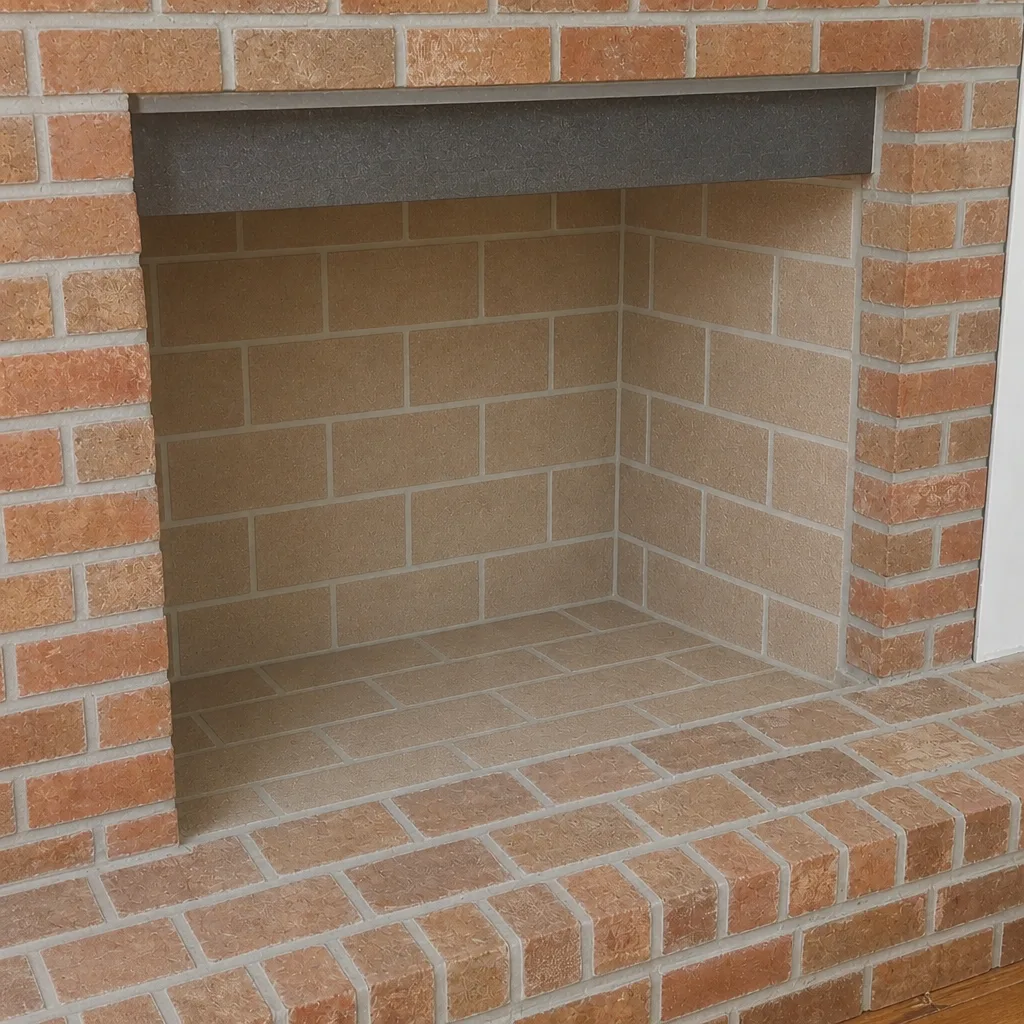
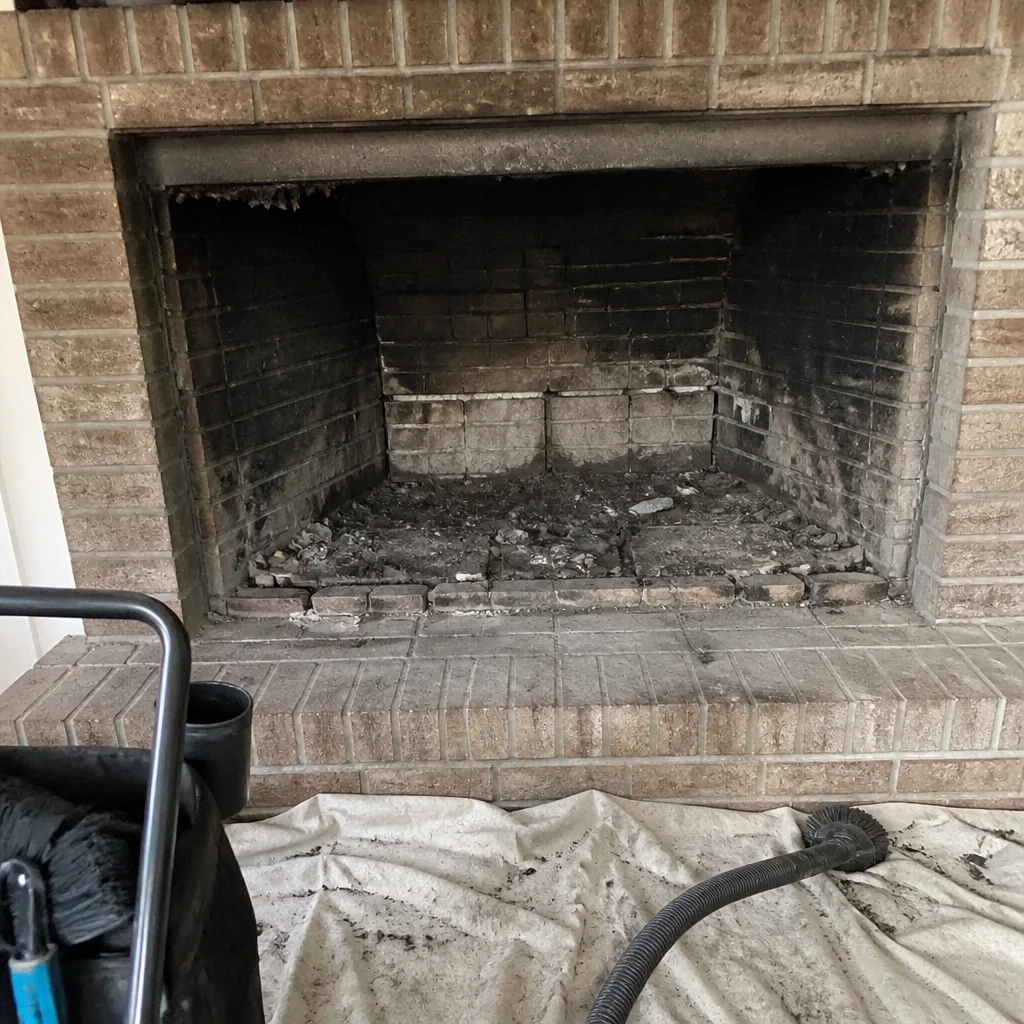
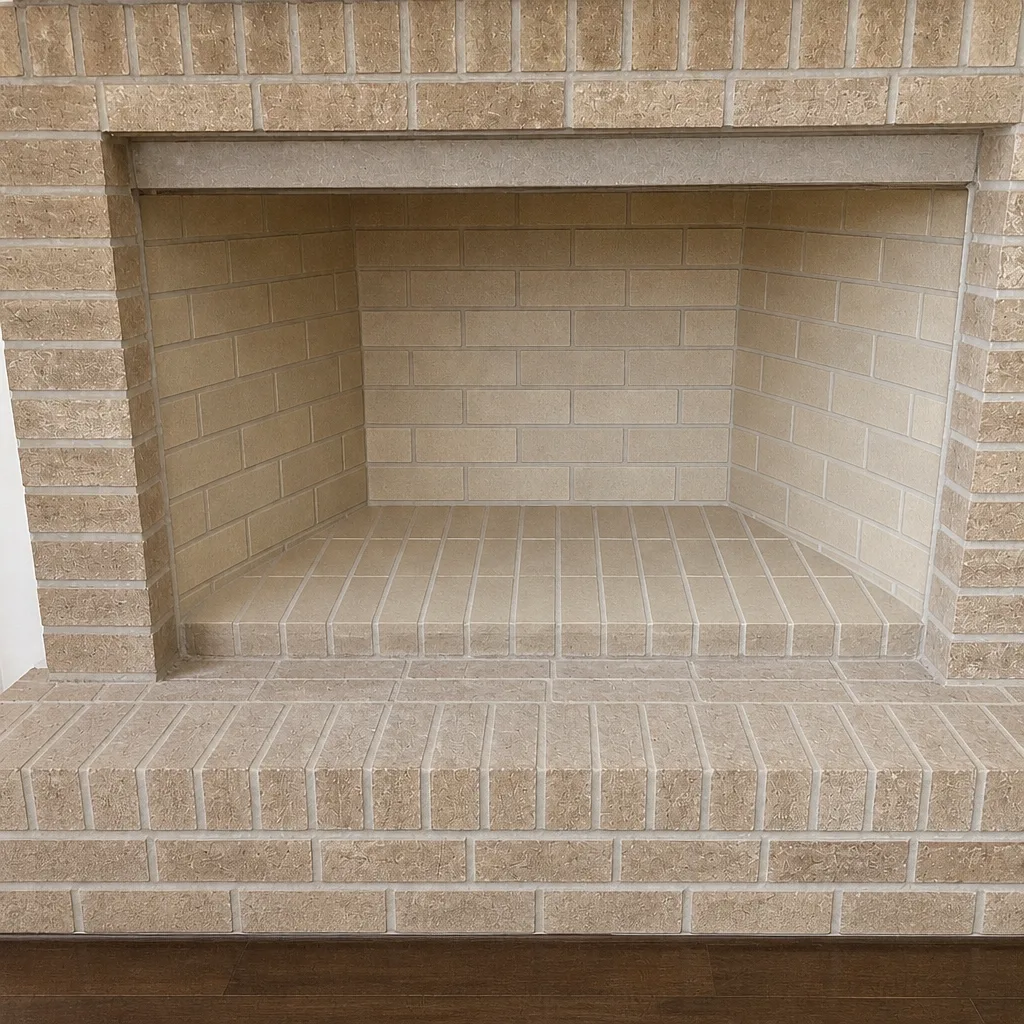
See the difference
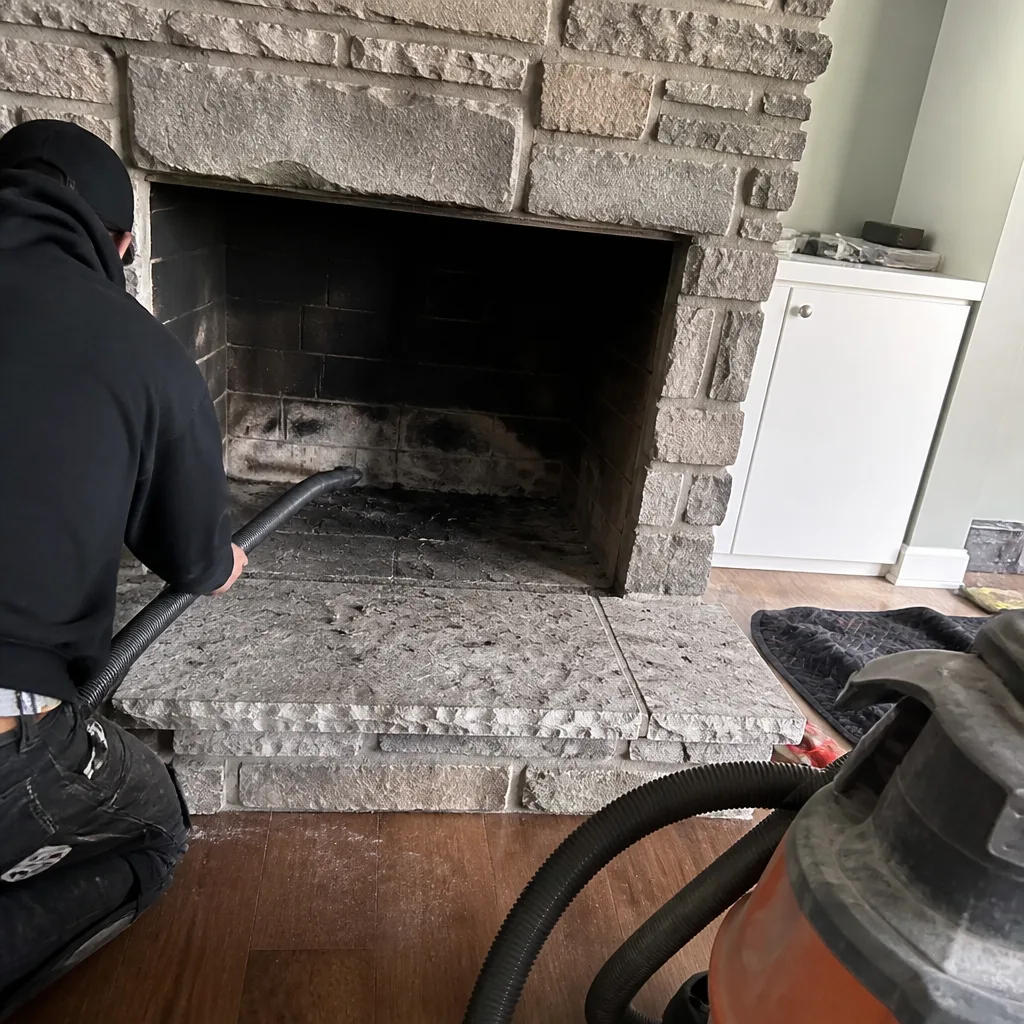 Before
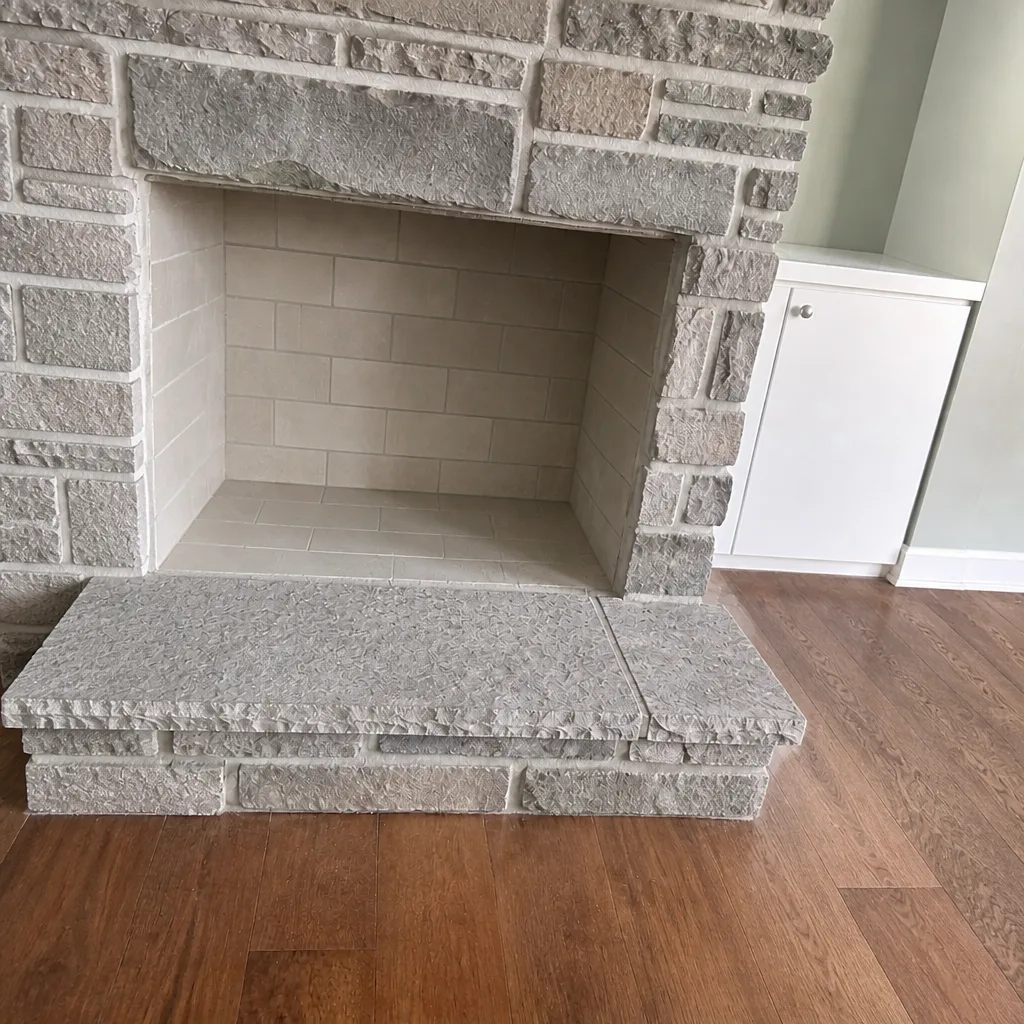 After
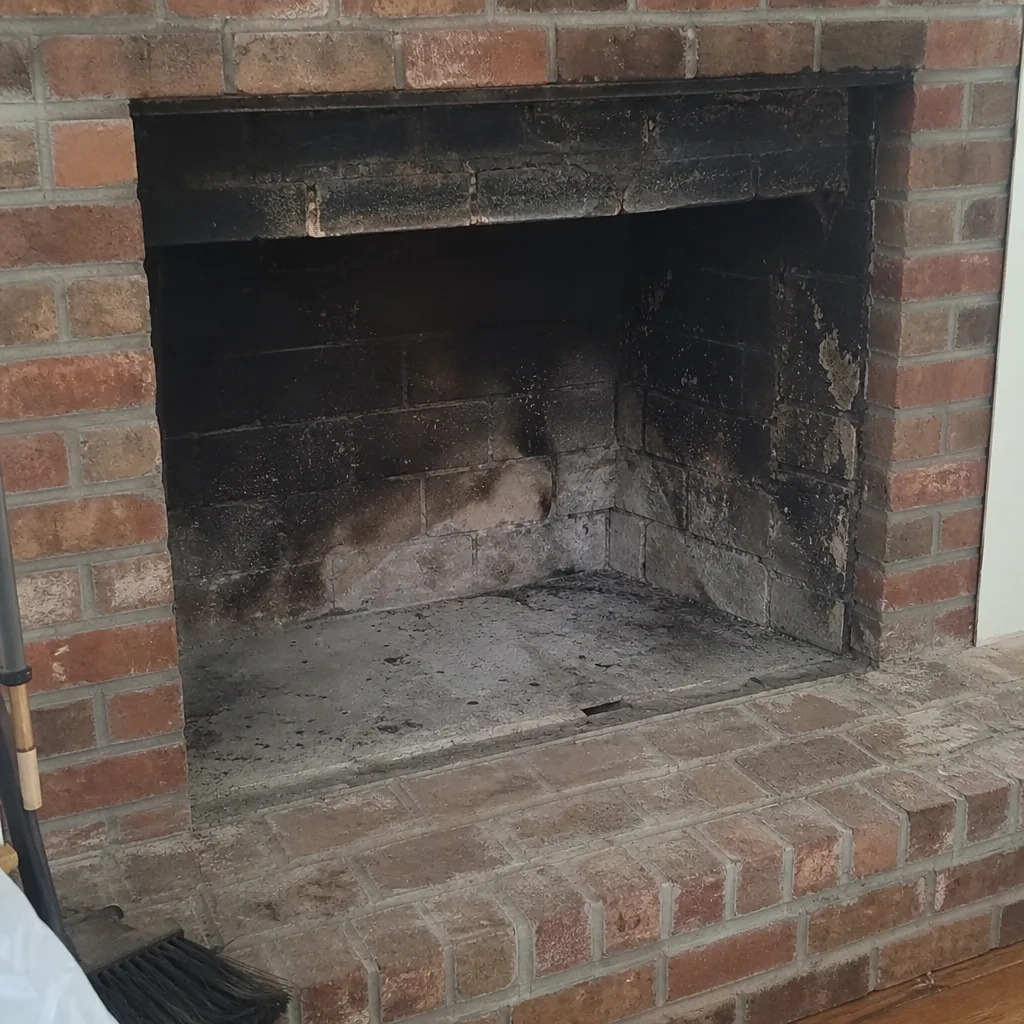 Before
 After
 Before
 After
When to Call a Professional
Some situations go beyond what a homeowner with a brush should attempt. Book a professional sweep and inspection when any of these apply: the chimney hasn’t been inspected in over a year; there’s been a chimney fire, even a small one; you’re seeing shiny stage-2 or puffy stage-3 creosote; the firebox smells strongly after rain, which can signal water intrusion; there’s efflorescence (white staining) on the exterior brick; the chimney is original to a 1990s or 2000s home and has never been inspected; or you’re simply not sure what state the liner is in and want to know before winter. Fishers Chimney Sweep offers free estimates in Fishers. Call (844) 761-5757. We answer 24/7.
Frequently Asked Questions
Yes, for light soot and stage-1 creosote on accessible flue sections, a homeowner with the right brush and HEPA vacuum can remove surface buildup. What you can’t do is assess liner integrity, crown condition, or flashing, so DIY cleaning without a professional inspection creates a false sense of safety rather than real risk reduction. Book the inspection first, then decide whether to clean in between visits.
A professional chimney sweep in the Fishers area is priced per job, and the written estimate sets the final price. We give free estimates up front so you know the cost before anything is booked. Call (844) 761-5757 for an exact quote on your chimney.
A professional sweep uses rotary cleaning equipment that removes stage-1 and stage-2 creosote from the tile wall, plus a camera inspection that shows every tile joint and the top of the flue. A hand brush removes loose soot from the sections you can reach and does nothing to hard glaze or liner cracks. The gap between the two is the gap that protects the house.
A firebox that looks fine can still sit on a flue with a cracked tile, failed crown, or water intrusion that hasn’t reached the point of visible damage yet. In Fishers, freeze-thaw cycling turns small cracks into bigger ones over a few winters, and the firebox view doesn’t show either. A camera inspection is the only way to know.
No. DIY cleaning has a legitimate place for light soot and stage-1 creosote on the accessible flue, and homeowners who do it between professional annual inspections are saving real effort without adding risk. The problem is DIY cleaning as a substitute for inspection, not as an addition to it. Clean if you want to. Get inspected regardless.
Cracked flue tiles, failed liner joints, a crown that’s cracked or pulling away, flashing that’s failing at the roof line, and stage-2 or stage-3 creosote deposits above the smoke chamber offset. All of those are invisible from the firebox. The inspection report includes camera evidence, so nothing gets recommended that you can’t see for yourself. Call (844) 761-5757 for a free estimate.
The Bottom Line
DIY chimney cleaning isn’t irresponsible. It’s just incomplete. You can remove soot and light creosote from the flue sections you can reach, and that’s worth something. What you can’t do from a firebox is see the liner crack, the crown failure, or the flashing that’s letting water into the masonry, and those are the problems that turn into chimney fires and repair bills. The decision that matters isn’t brush vs. no brush. It’s whether a professional inspection is on record for your Fishers chimney. Book the inspection, clean in between if you want to, and know what’s inside your chimney before winter.
Call (844) 761-5757 for a free estimate. We answer 24/7. Fast dispatch from 7am to 7pm, Sunday through Friday.
Written by the team at Fishers Chimney Sweep.