
Last updated November 15, 2026
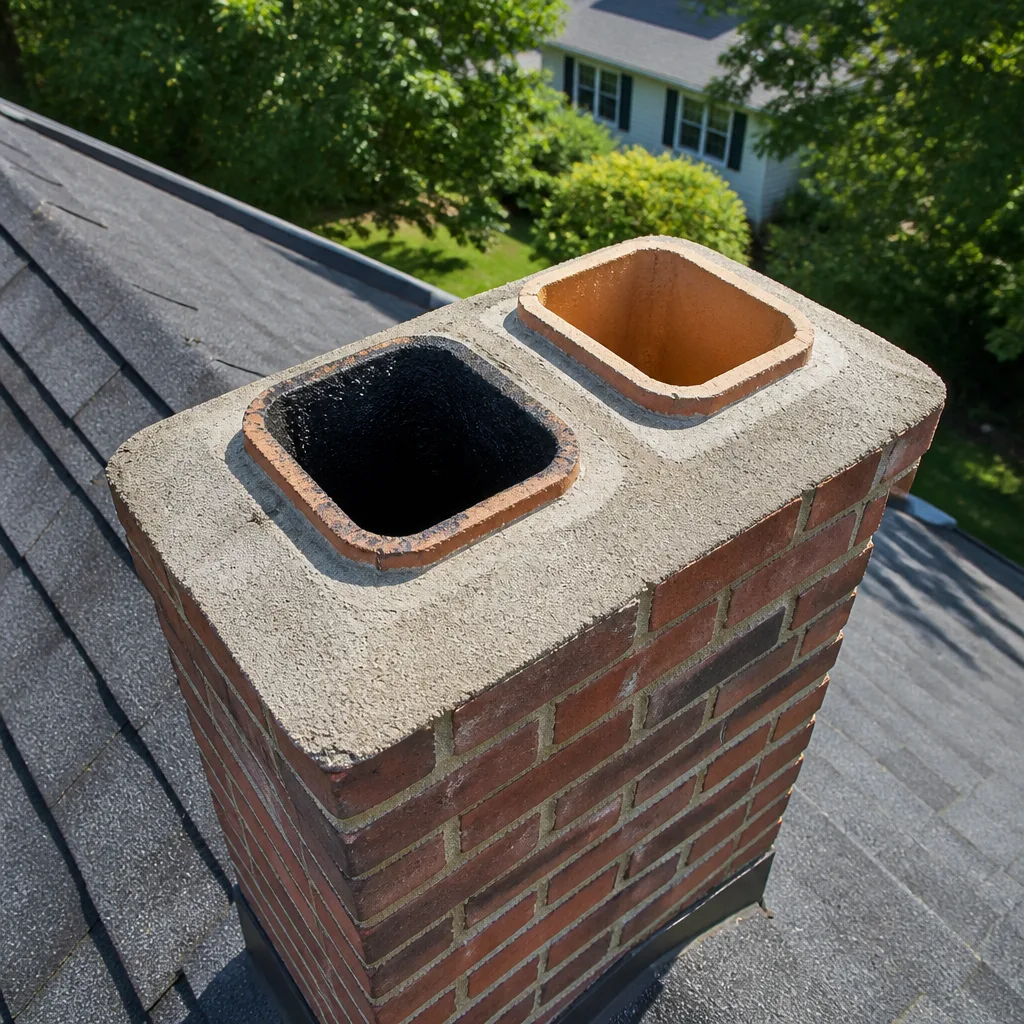 Sweep & inspection
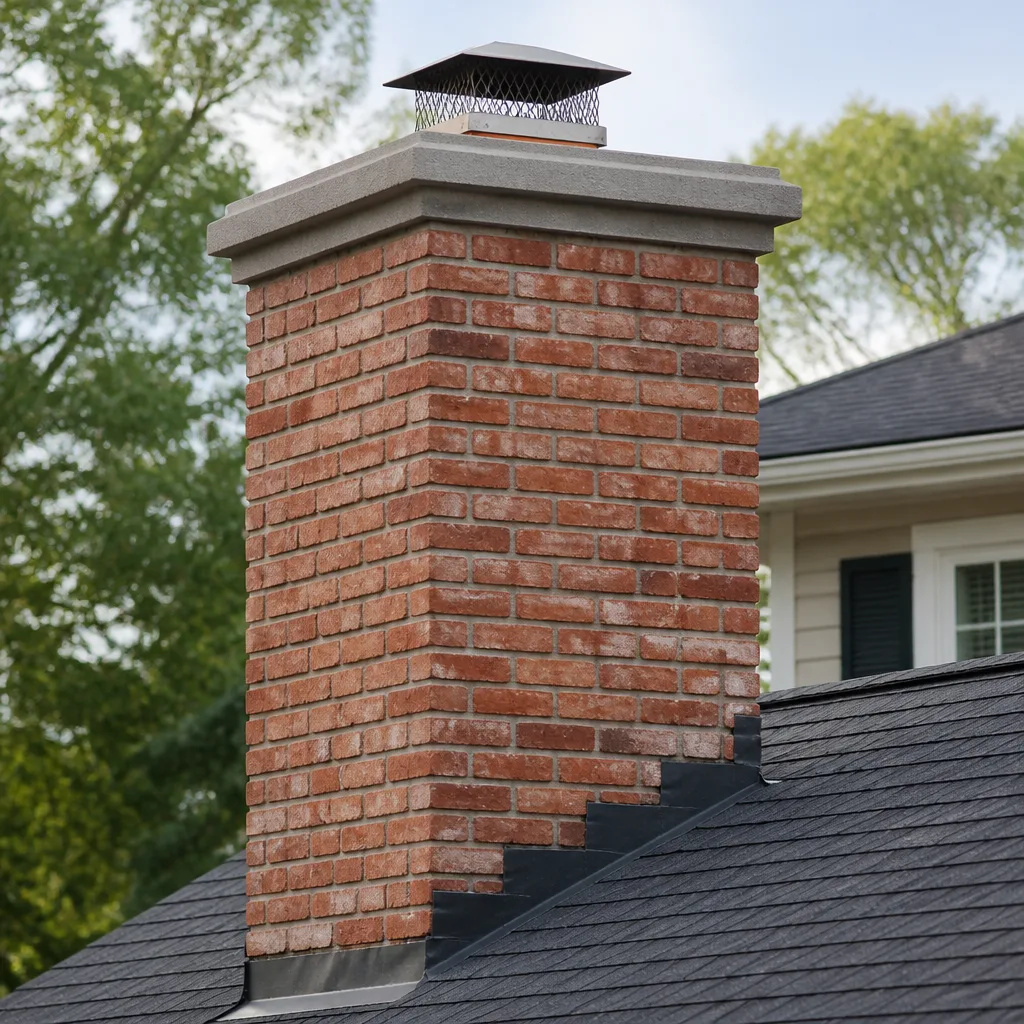 Caps & crowns
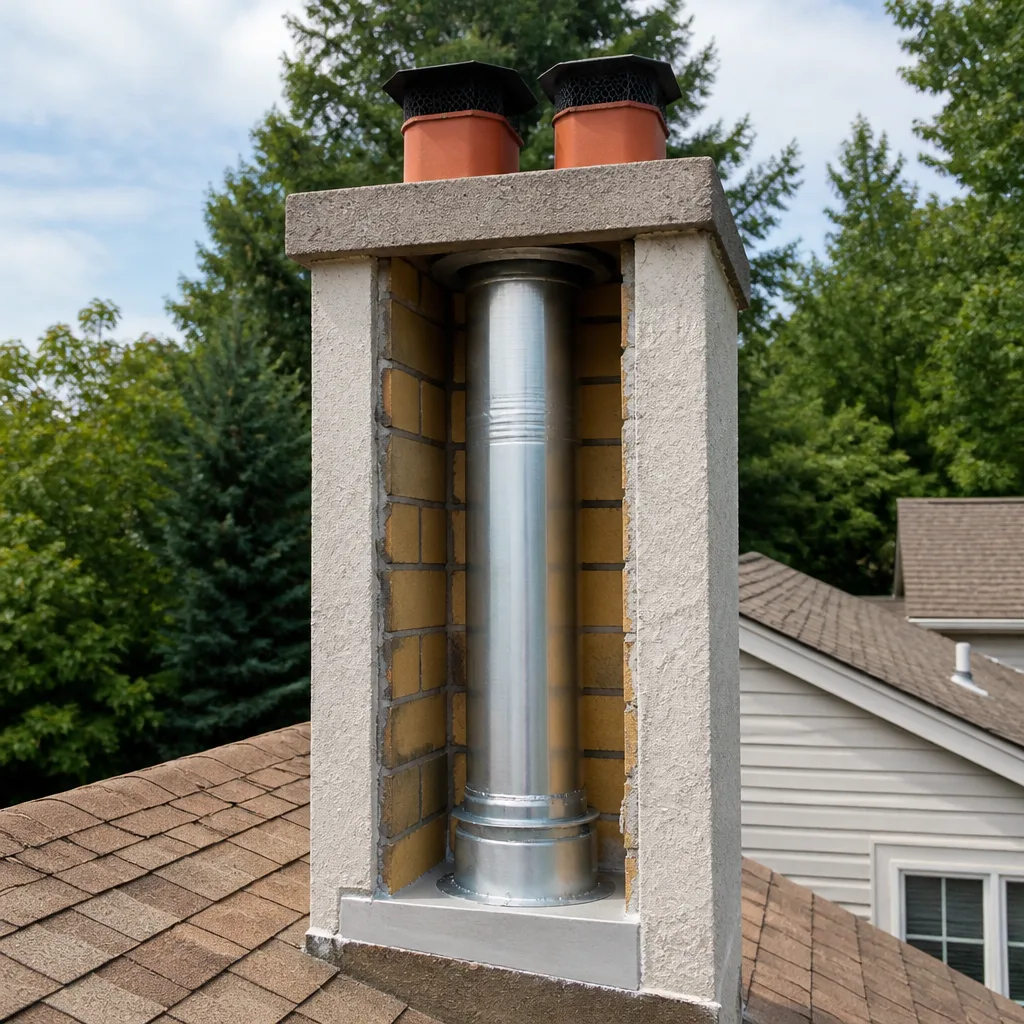 Flue relining
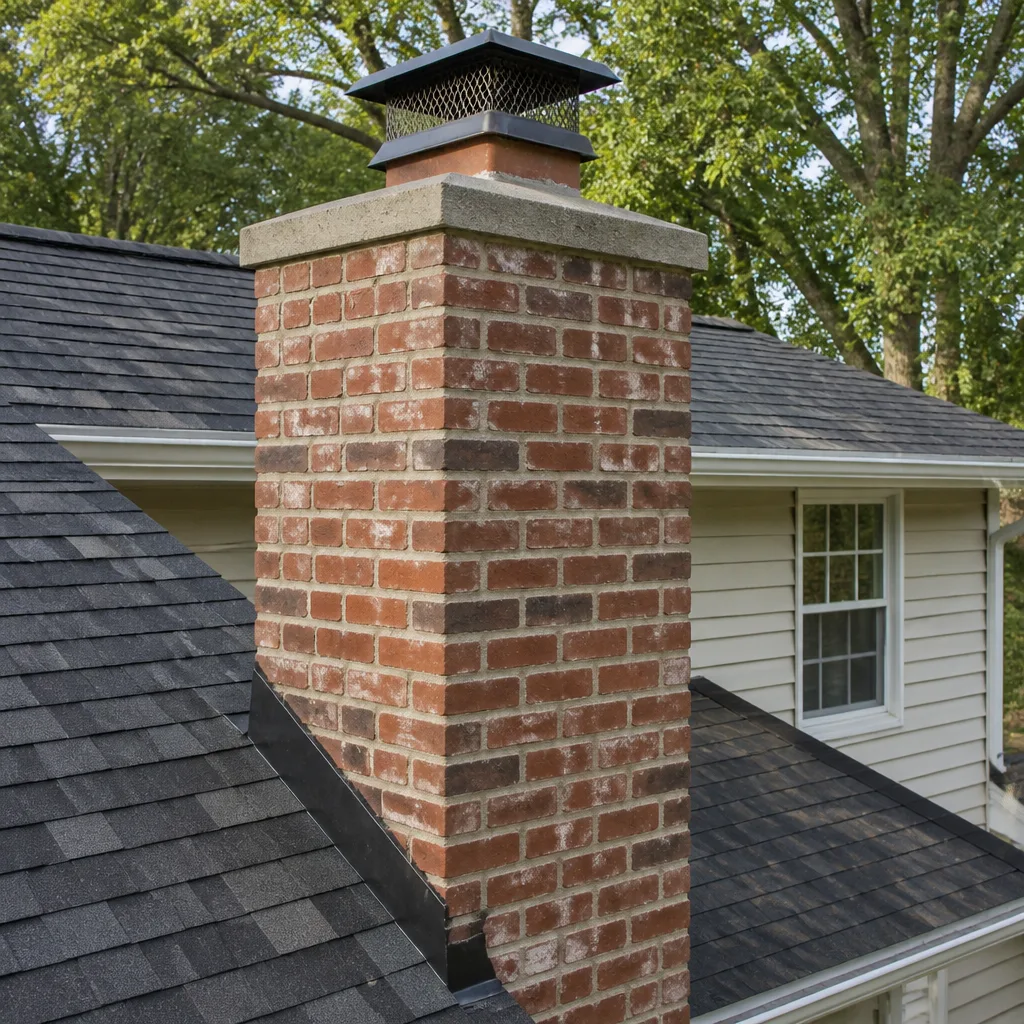 Masonry repair
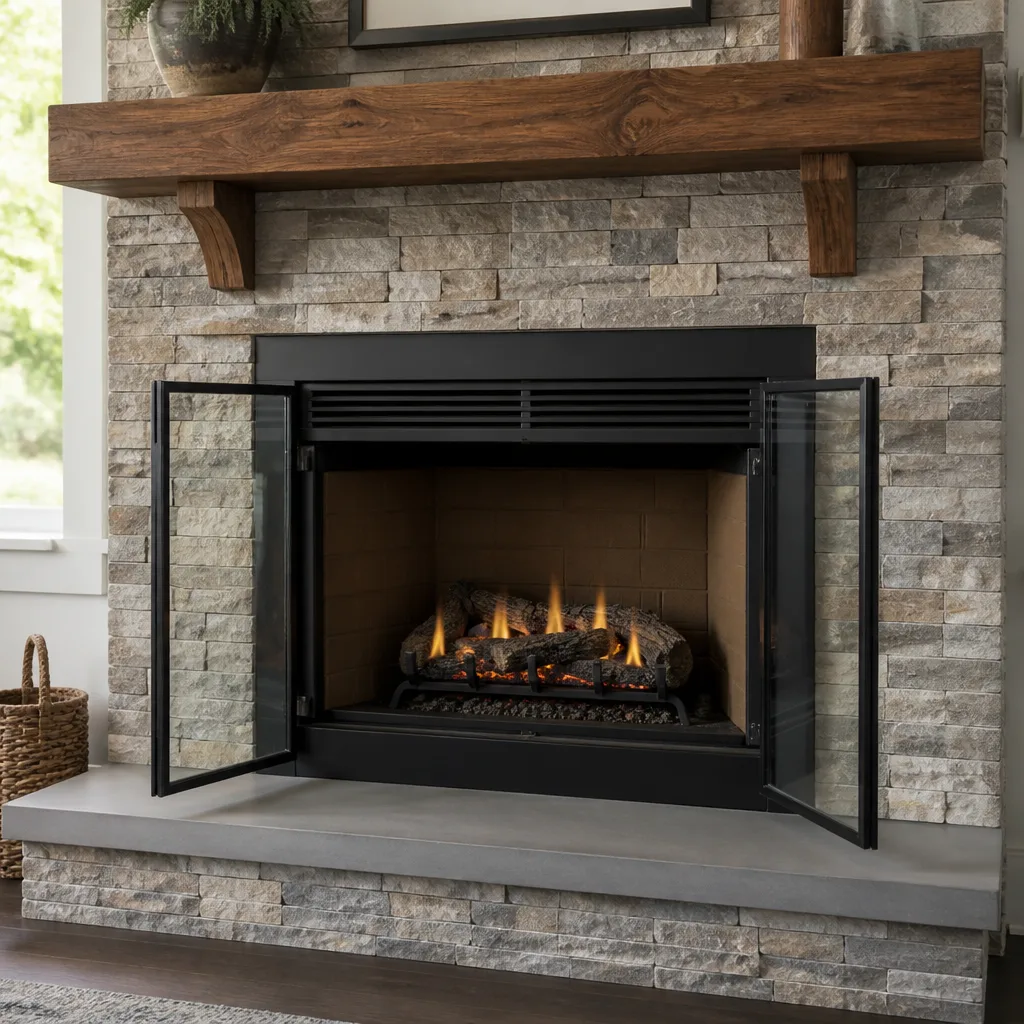 Gas fireplace service
Level 1 sweep and inspection to the NFPA 211 annual standard - flue, crown, cap, and flashing checked and photographed
Chimney sweep logs do not sweep chimneys. They loosen some creosote - which then falls where a brush and vacuum still have to collect it.
Chimney Cleaning Warning Signs: A Fishers Homeowner’s Reference Guide
Most homeowners expect a chimney problem to announce itself. A crash, a plume of smoke, a fire truck. It rarely works that way. What we actually see in Fishers are quiet signals: a faint smell that shows up in April instead of December, a fireplace that draws a little slower than it did two winters ago, a chalky white stain on the brick that looks like something a power washer would fix. These are the early notes a chimney makes before it becomes a structural conversation. This guide names each signal specifically, explains the mechanism behind it, and tells you which ones mean “schedule a sweep” and which mean “stop burning tonight.”
Quick Answer
The main chimney cleaning warning signs are: a smoky or acrid odor when the fireplace is cold, smoke rolling back into the room instead of rising, dark staining or white chalky bloom on the exterior brick, a hollow or flaky texture inside the firebox, and a draft that feels weak or erratic when you hold a hand near the open damper. Any one of these means it’s time to book an inspection and sweep. Two or more together, or smoke actually entering the room, means stop using the fireplace until a specialist has looked at it.
Styles & brands we work with
- Sweep & inspection
- Caps & crowns
- Flue relining
- Masonry repair
- Gas fireplace service
Table of Contents
- The Five Sensory Warning Signs and What Each One Means
- Creosote Smell vs. Animal Odor: Telling Them Apart
- Why White Efflorescence on Exterior Brick Is a Moisture Flag
- What a Puffback Really Tells You About Your Flue
- Watch-and-Schedule vs. Stop-Using-Immediately
- How Fishers Weather Shapes Chimney Wear
- What a Proper Inspection Actually Checks
- How Often Should a Fishers Chimney Be Swept?
The Five Sensory Warning Signs and What Each One Means
Chimney problems reach you through your senses long before they reach your wallet. The trick is knowing which sensation maps to which failure. Here are the five we ask Fishers homeowners about first, and the specific variations that change the diagnosis.
1. Odor. A cold fireplace that smells like burnt wood and old ash is normal. A cold fireplace that smells sharp, tarry, or like a campfire that never quite went out is not. That acrid note is creosote off-gassing, and it intensifies on warm, humid days when the pressure outside the house shifts. A sour or musty smell points somewhere else entirely: moisture trapped in the flue or behind the damper.
2. Smoke behavior. Watch the first ten minutes of a fire. Smoke that hesitates at the damper, curls along the lintel, or spills into the room before it rises is telling you the flue isn’t pulling. Sometimes that’s a cold flue. Sometimes it’s a blockage, a sizing problem, or a liner that’s no longer smooth.
3. Visual discoloration. Inside the firebox, look for dark, glassy patches on the brick or a buildup that looks like black varnish. That’s stage-three creosote, and it’s the flammable kind. Outside, look at the brick above the roofline for white staining, soot streaks, or sections that look darker than their neighbors.
4. Sound. A fireplace should be quiet apart from the fire itself. A low whistle or hum during a burn suggests air moving through a gap it shouldn’t be using. Clicking or ticking after the fire dies down can mean metal components expanding and contracting unevenly.
5. Draft feel. With no fire burning and the damper open, hold your hand near the opening. You should feel a gentle, steady pull of air going up. Nothing at all, or air pushing back toward you, is a red flag worth scheduling around.
Creosote Smell vs. Animal Odor: Telling Them Apart
Both smells mean the chimney needs professional attention, but they mean different problems and get handled in different ways. Getting the distinction right saves you from paying for the wrong service.
Creosote has a smoky, tarry, slightly bitter quality. It’s the smell of incomplete combustion baked into the flue walls. You’ll notice it most on damp days, in spring and early fall, and especially in a house that hasn’t had a fire in months. When the outdoor temperature and humidity rise, the creosote layer softens slightly and releases that smell into the living space through the firebox. It’s a sign of buildup, and buildup is exactly what a chimney sweep is for.
Animal odor is biological. It smells like droppings, nesting material, or a dead animal, and it often comes with a secondary sound: scratching, fluttering, or chirping from above the damper. Birds, squirrels, and raccoons all find chimney flues inviting, and a missing or damaged cap is usually how they got in. This is a two-part job: the animal has to be removed and the flue cleaned and sanitized, and then the cap has to be repaired so it doesn’t happen again.
A quick way to sort them:
- Smoky and tarry, worse on humid days: creosote. Book a sweep.
- Musty and earthy, worse after rain: moisture intrusion. Book an inspection to find the entry point.
- Biological or ammonia-like, with scratching sounds: animal intrusion. Book a sweep and cap repair.
- Rotting or sewage-like: could be a cracked liner letting moisture and decomposition gases into the flue. Needs inspection before another fire.
In our experience, Fishers homeowners in older neighborhoods often describe a smell as “just the chimney being a chimney” for a season or two before booking. That’s the exact window where a simple sweep solves the problem and a bigger repair starts becoming possible.
Why White Efflorescence on Exterior Brick Is a Moisture Flag
That chalky white bloom on the outside of the chimney is one of the most commonly misread signs we see in Fishers. Homeowners often assume it’s a cosmetic problem or something a pressure washer will handle. It isn’t, and pressure washing it can make the underlying issue worse.
Efflorescence is salt that has migrated to the surface of the masonry as water moves through it. Water enters the brick or mortar somewhere, dissolves naturally occurring salts, travels to the exterior, and evaporates, leaving the salts behind. Where there’s efflorescence, there’s water getting in. The water could be coming from:
- A failing chimney crown that has cracked and is letting rain run down into the masonry.
- Missing, cracked, or improperly installed flashing where the chimney meets the roof.
- Spalling brick or deteriorated mortar joints that allow direct water entry.
- A flue liner that has cracked and is allowing moisture to migrate through the chimney structure.
Each of these gets worse with freeze-thaw cycles, and central Indiana has plenty of those. Water that soaks into brick, freezes, and expands will crack the brick from the inside. What starts as a white stain becomes a spalled face, then a loose brick, then a chimney that needs masonry repair rather than a tube of sealant.
If you’re seeing efflorescence on your Fishers chimney, schedule an inspection rather than a cleaning. The inspection identifies the water path, and the repair addresses it at the source, whether that’s a crown rebuild, flashing repair, or a liner assessment. That’s the kind of diagnostic-to-repair flow a dedicated chimney specialist can handle end to end.
What a Puffback Really Tells You About Your Flue
A puffback is a small, contained smoke explosion: the firebox suddenly belches smoke and soot back into the room instead of sending it up the flue. It’s startling, it’s messy, and it’s usually the event that finally prompts a phone call. But what it means is more specific than “the chimney needs cleaning.”
A puffback happens when the flue can’t handle the volume of smoke and gas the fire is producing, so pressure builds in the firebox until it releases out the only opening available: the front. The causes are almost always one of these:
- Significant creosote blockage. The flue has narrowed enough that it can’t move the smoke. This is the most common cause, and it’s the one that carries a chimney fire risk.
- A flue that’s undersized for the firebox. Some fireplaces were built with flues that work fine with a modest fire and fail with a large one.
- A liner that has collapsed, separated at a joint, or lost its smooth interior. Turbulence inside a damaged liner causes the draft to stall.
- Negative pressure in the house. Modern, tightly built homes can pull air down the chimney when a bath fan, kitchen hood, or furnace is running, competing with the chimney for air.
After a puffback, stop using the fireplace until it’s been inspected. The soot left behind is corrosive, and the underlying draft problem won’t fix itself. An inspection identifies whether this is a cleaning issue, a liner issue, or a house-pressure issue, because the correct repair is different in each case. When a liner is the problem, we work with professional-grade systems like DuraFlex flexible liners and Olympia Chimney components to bring the flue back to a sound, smooth interior where the draft can recover.
Watch-and-Schedule vs. Stop-Using-Immediately
Not every warning sign is an emergency, and treating them all that way trains homeowners to ignore the ones that matter. Here’s how we sort the signals a Fishers homeowner should be looking for.
Watch and schedule within the month:
- A mild smoky smell from a cold fireplace on humid days.
- Light, powdery soot buildup inside the firebox that you’ve noticed growing over a season.
- White efflorescence appearing on exterior brick, without any brick damage yet.
- A slightly weaker draft than you remember from last year.
- A small stain on the ceiling or wall near the chimney chase (schedule promptly; this one doesn’t wait long).
Stop using the fireplace until it’s been inspected:
- Smoke rolling into the room during a burn or a puffback event.
- A strong, sharp creosote smell even when the fireplace is cold and has been for months.
- Visible shiny, glazed, black buildup on the firebox walls.
- Any cracking, crumbling, or separation in the flue liner visible from the firebox.
- A roaring sound from the chimney during a fire that isn’t coming from the firebox.
- Popping or crackling sounds from the chimney after the fire has died down, or a burned, flaky texture on the exterior of the flue.
- A carbon monoxide alarm sounding in the home.
That last one deserves a direct line: if your CO alarm sounds, get everyone out of the house and call 911 first. Don’t investigate the chimney yourself. Once the home is cleared, call us to schedule the inspection. Carbon monoxide is odorless, which is exactly why the alarms matter, and why a chimney that shows any of the other stop-using signs shouldn’t be used until it’s been checked.
How Fishers Weather Shapes Chimney Wear
Chimney problems aren’t generic. The climate your chimney lives in shapes what fails first. In Fishers, three local factors do most of the work.
Freeze-thaw cycling. Central Indiana winters swing above and below freezing repeatedly, and that’s harder on masonry than a consistently cold winter. Water gets into a hairline crack, freezes overnight, expands, and thaws the next afternoon. Year after year, that cycle widens cracks in the crown, opens mortar joints, and turns a small repair into a masonry project. This is why efflorescence and crown cracks are the two exterior signs we ask Fishers homeowners to keep an eye on every season.
Humid summers. Fishers summers are warm and humid, and that’s when creosote off-gassing is strongest. A fireplace that was swept in the fall and hasn’t burned since will still release a smoky smell in July if the flue walls carry heavy buildup. That smell is often the first signal of the year, arriving months before the fire season starts.
Modern, tight construction. Many Fishers homes are recently built and well sealed. That’s excellent for energy bills and not always excellent for chimneys, which depend on air coming in to push smoke out. A house that’s tight enough for a bath fan to compete with the flue is a house where a puffback or draft stall can happen even with a clean chimney. If you’ve noticed smoke rollback but the flue has recently been swept, house pressure is the next thing to rule out.
We’ve also seen a pattern in newer Fishers subdivisions where the original construction didn’t include a proper chimney cap. A missing cap invites rain, animals, and debris, and it’s one of the cheapest repairs to get ahead of. If you’ve never looked at the top of your chimney, that’s worth a photo from the ground next time you’re outside.
What a Proper Inspection Actually Checks
A chimney inspection isn’t a glance up the flue and a nod. A proper inspection covers the full system, inside and out, and produces findings you can see for yourself.
Here’s the checklist we walk through:
- Firebox and damper. Cracks in the firebox brick, condition of the damper and its seal, and any gaps at the smoke chamber.
- Flue interior. A camera inspection checks for creosote level, liner integrity, gaps at joints, and evidence of past chimney fires.
- Smoke chamber. The transition between firebox and flue is where turbulence and buildup form, and it’s often missed.
- Chimney crown and chase cover. Cracks, spalling, and the crown’s slope, which is what directs water away from the chimney in the first place.
- Flashing and roof connection. The water entry point most often missed on Fishers homes, because the water shows up on the ceiling instead of at the chimney.
- Exterior masonry. Efflorescence, spalling, mortar joint condition, and the cap.
- Draft performance. An actual measurement, not a guess, of how the flue is pulling under real conditions.
We recommend asking for photos or video from the camera inspection. You shouldn’t have to take anyone’s word for it that you need a liner replacement or $4,000 of masonry work. When the problem is genuinely inside the flue, the evidence is right there on the screen, and you can see it. When a chimney can safely wait another season, we say so, and we’d rather tell you that and see you again next year.
When repair is needed, our work with professional-grade brands like HeatShield and Famco means we can often restore a deteriorating flue with a resurfacing approach rather than tearing out and replacing the entire liner. That’s a repair option many generalists can’t offer, and it can make the difference between a resurfacing job and a full reline.
How Often Should a Fishers Chimney Be Swept?
For most Fishers households that burn regularly through the winter, an annual chimney sweep and inspection is the baseline, and it’s the same guidance most chimney professionals give. That said, the “annual” rule is a floor, not a ceiling.
Two factors move the schedule:
- How much you burn. A household that uses the fireplace several times a week through the season needs the sweep checked every year. Some heavier users need it twice.
- What you burn. Well-seasoned, dry hardwood produces less creosote than unseasoned wood or softwood, but no fuel produces none. Buildup is a gradual thing, and it’s the compounding that catches people out.
Gas fireplaces and fuel-burning appliances also warrant an annual inspection even without a wood-burning sweep. Gas flues can develop blockages from debris, and a gas appliance that’s venting improperly is a carbon monoxide concern. It’s a smaller inspection, but the annual habit is the right one.
Our technicians have up to 14 years of experience, and the pattern is consistent: the homes that book annually rarely need big repairs, and the homes that skip two or three seasons in a row are the ones that need them. If you can’t remember the last time the chimney was swept, that’s your answer.
Common Mistakes to Avoid
These are the recurring missteps we see in Fishers homes, and each one tends to turn a small job into a bigger one.
- Assuming a clean-burning fire means no creosote. Even a well-managed fire produces some creosote, and that small layer is exactly what hardens into the flammable glaze over a couple of seasons. Frequency beats intensity.
- Pressure-washing efflorescence off the brick. The white stain will come back within a season if the water source isn’t fixed, and the pressure itself can drive water deeper into the masonry and break down mortar faster.
- Treating puffback as a one-time fluke. A puffback means the flue failed to evacuate smoke under real conditions. Assuming it won’t happen again is the mistake; book the inspection.
- Using a general handyman for chimney repair. Chimney work is its own trade with its own materials and codes. A repair done with the wrong materials can fail faster than the original problem.
- Ignoring the exterior in favor of the firebox. A lot of serious chimney problems start on the roof: crown cracks, flashing failures, and spalled brick. Half of the annual inspection happens outside the house.
- Waiting for the smoke to be visible before booking a sweep. By the time smoke is rolling into the room, the problem has been developing for seasons. The early signs are smell, draft, and appearance, not visible smoke.
- Skipping the inspection when the sweep is easy. A sweep cleans the flue. An inspection finds the liner problem, the crown crack, or the flashing failure. They aren’t the same service, and the inspection is what keeps a small issue small.
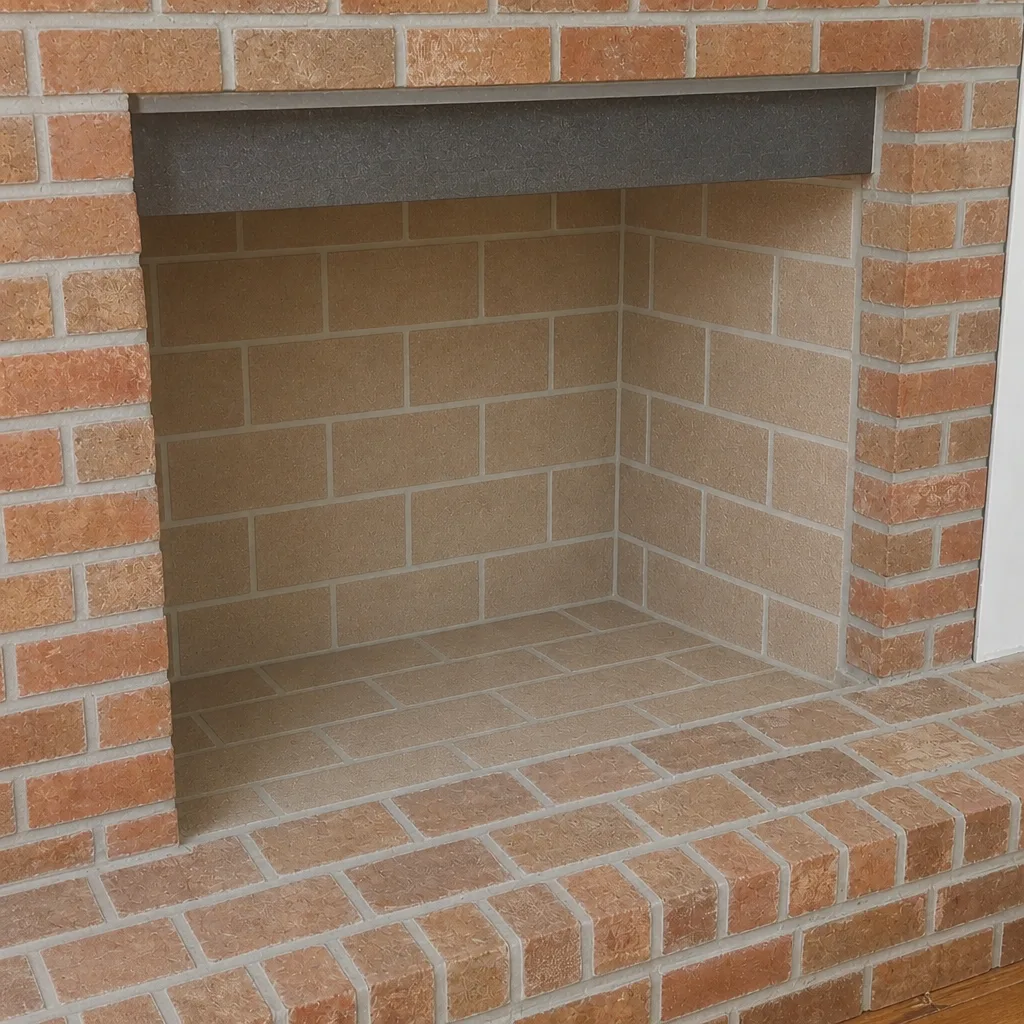
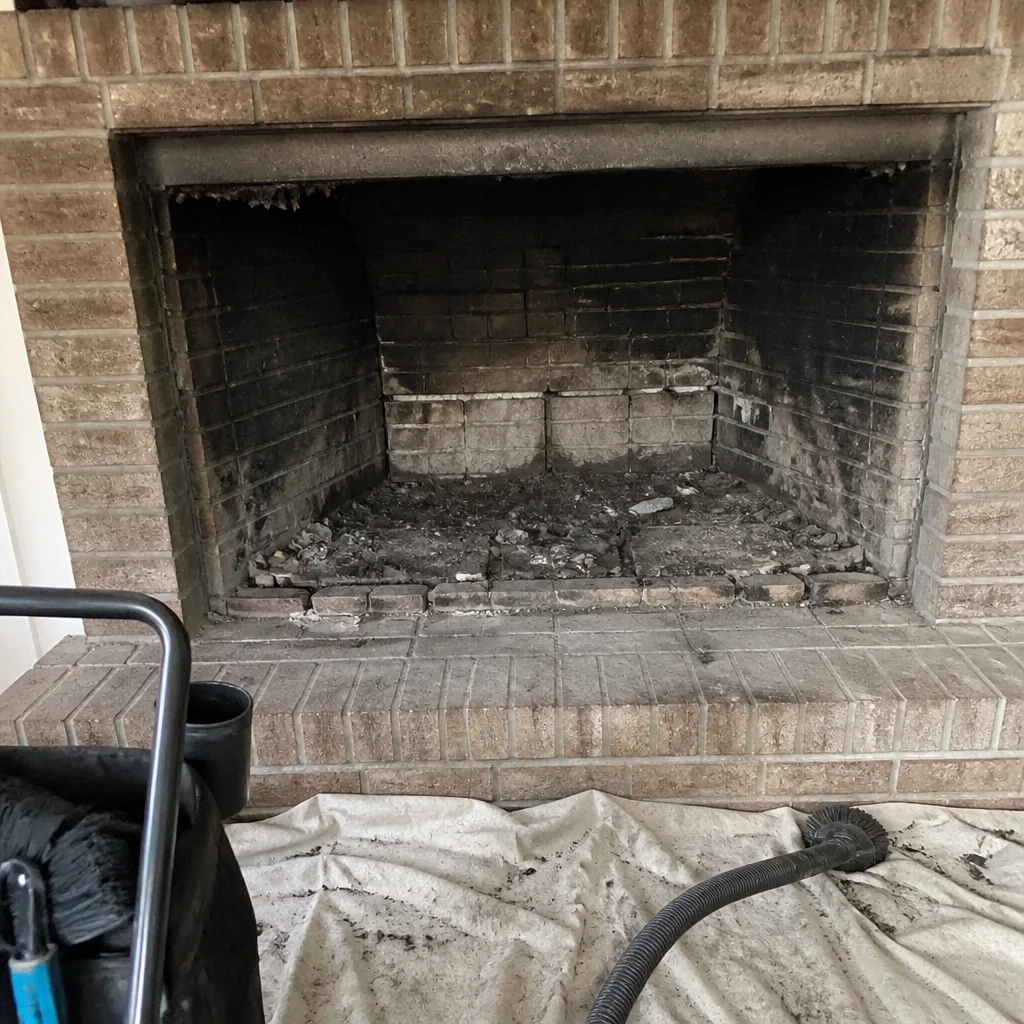
See the difference
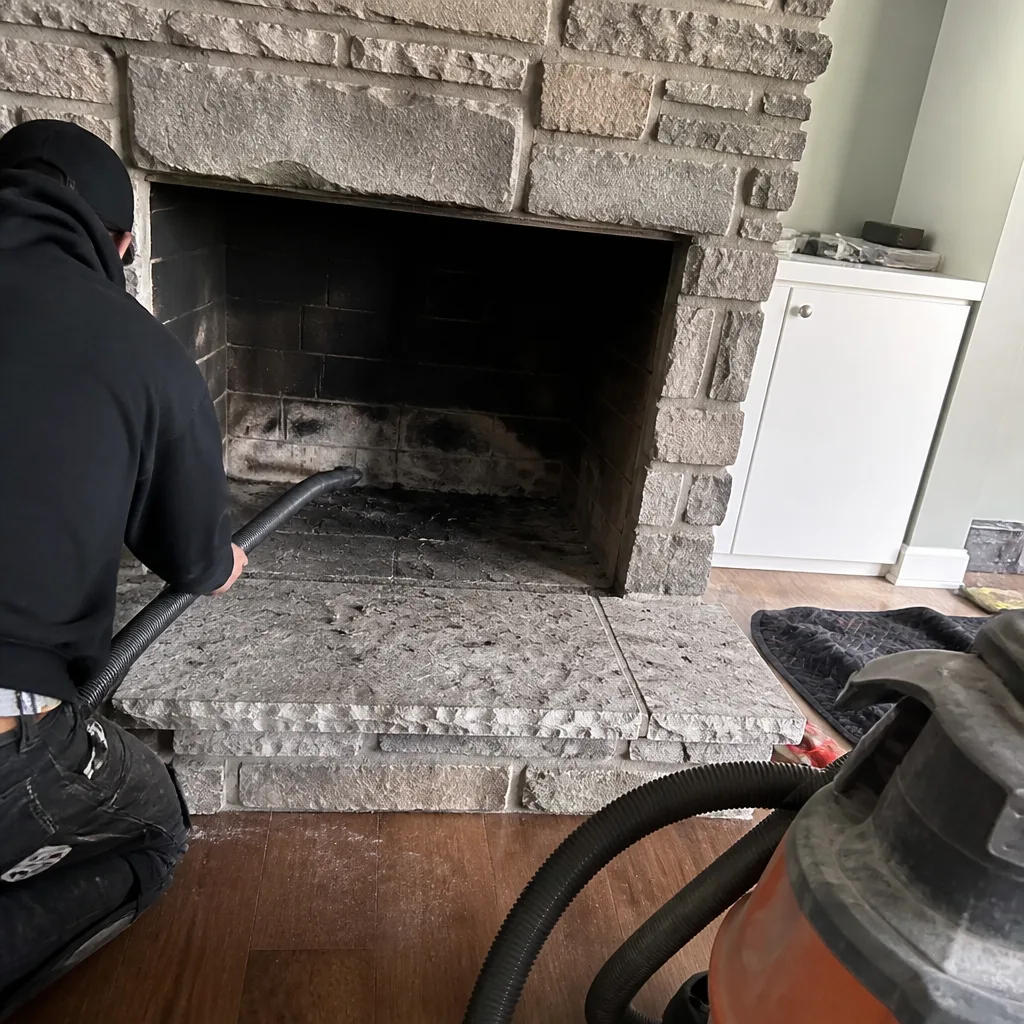 Before
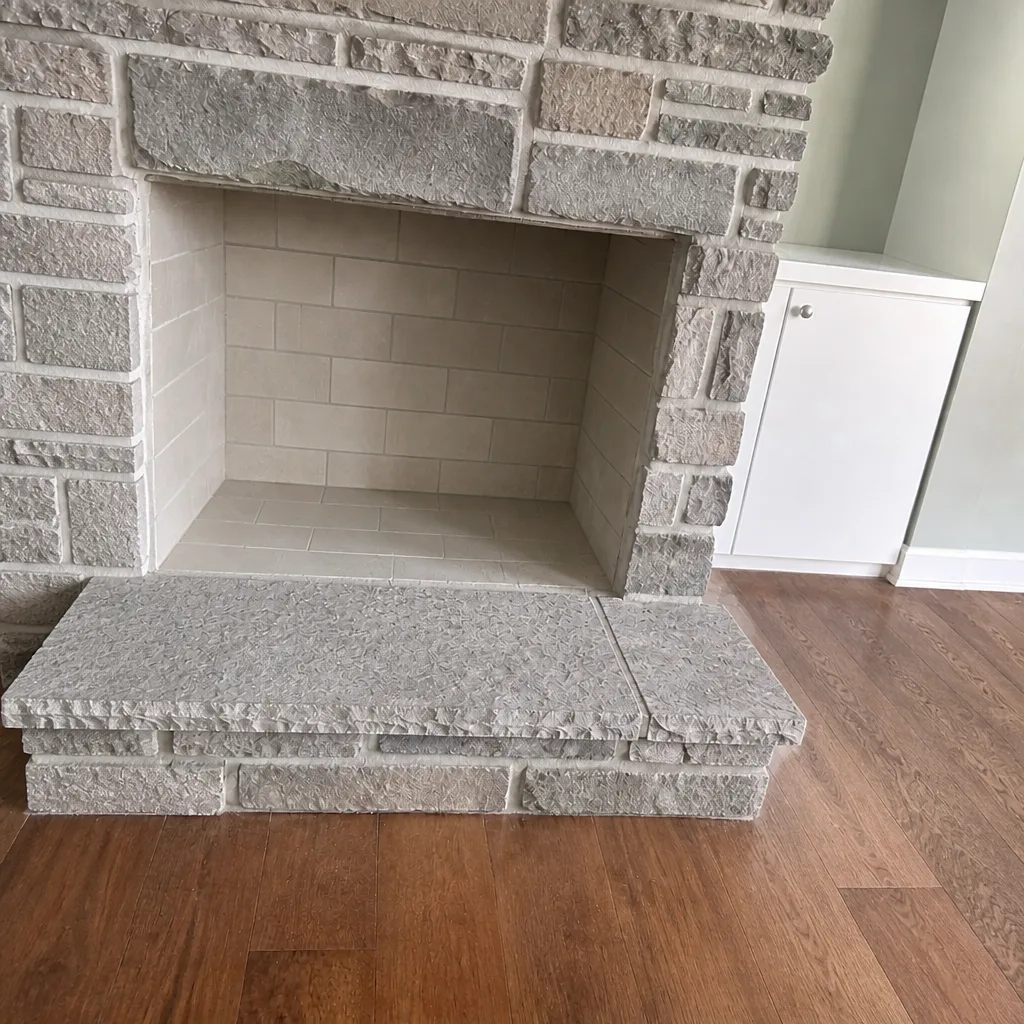 After
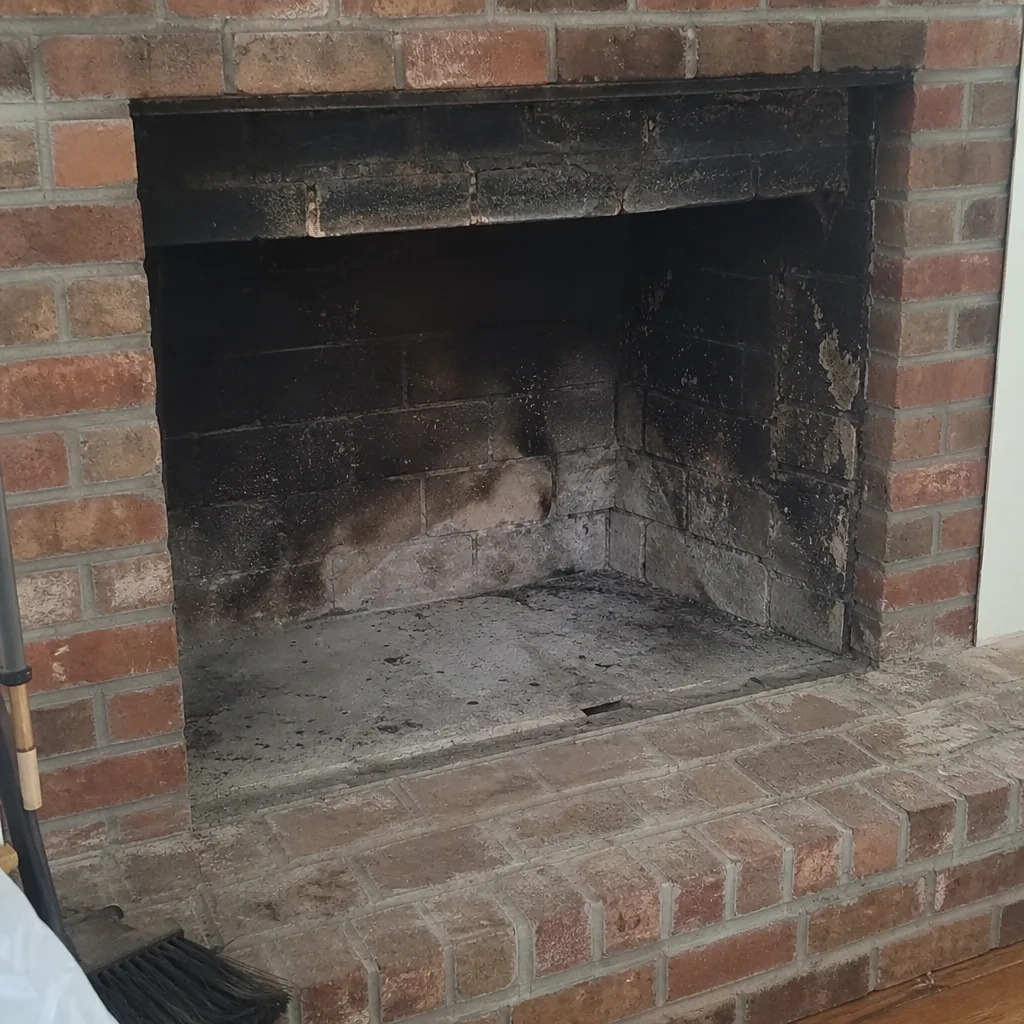 Before
 After
 Before
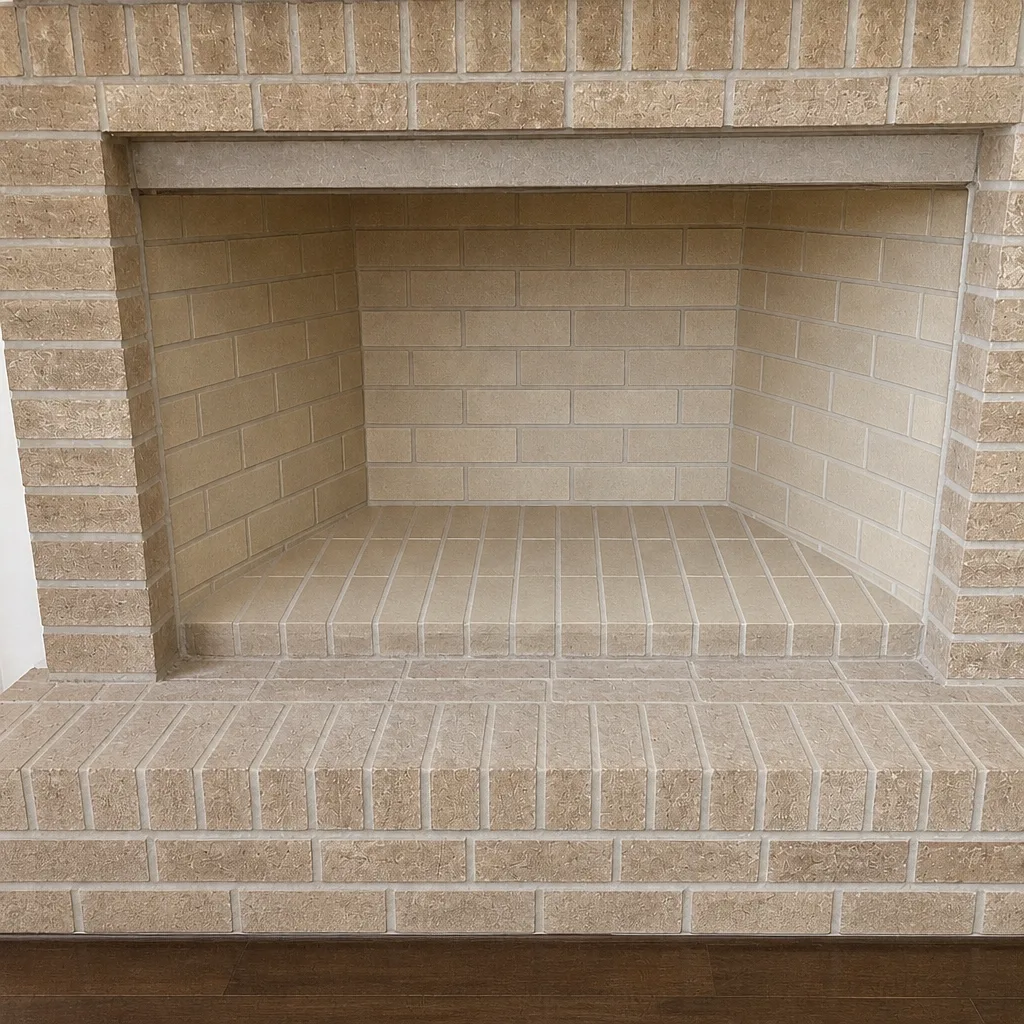 After
When to Call a Professional
Book a professional inspection if any of these apply: you can’t remember the last sweep, the fireplace smells smoky on warm days, smoke has ever rolled into the room, you see white staining or dark streaks on the exterior brick, you notice a glaze on the firebox walls, or you’ve just bought a Fishers home and don’t know the chimney’s history. Stop using the fireplace and call immediately if a puffback has happened, if smoke is entering the room during normal burns, if any component of the flue looks cracked or crumbling, or if a carbon monoxide alarm has sounded. A trained chimney specialist, not a generalist, should be the one assessing these signals, because what looks like a cleaning problem is often a liner, draft, or moisture problem in disguise. Fishers Chimney Sweep offers free estimates in Fishers. Call (844) 761-5757. We answer 24/7. Fast dispatch from 7am to 7pm, Sunday through Friday.
Frequently Asked Questions
Most chimney sweeps in Fishers fall in the $150 to $300 range for a standard cleaning, with inspections often priced separately, and the written estimate you receive sets the final price. What you’re paying for is the specialist’s time and the camera inspection that turns a cleaning into a diagnostic, not just a brush run. Get an exact quote for your chimney before you book. Call (844) 761-5757. Estimates are free.
Not usually. A liner replacement is only warranted when the existing liner has genuinely failed: significant cracking, separation at joints, a collapse, or a size mismatch that causes chronic draft problems. In many cases, a deteriorating liner can be restored with a resurfacing system that rebuilds the interior surface rather than tearing out the old liner. Either way, you should see the camera footage before agreeing to any liner work. Call (844) 761-5757 for an inspection you can see.
For most Fishers homes that burn wood regularly, an annual sweep and inspection is the standard. Homes that burn very frequently, or that have had a puffback or heavy creosote buildup before, may need it more often. The safest rule: the inspection tells you, not the calendar. Call (844) 761-5757 to book yours.
Creosote collects and hardens, draft performance drops, and the risk of a chimney fire rises as the buildup thickens. Separately, small exterior issues like a crown crack or flashing failure let water in, and freeze-thaw cycles turn a crack into a masonry repair. Most of what we repair in Fishers started as a signal the homeowner waited a season or two to act on. Call (844) 761-5757 to get ahead of it.
Sometimes, yes. On the first fire of the cold season, a cold flue can resist the initial draft for a few minutes before it warms up and pulls properly. But smoke that continues to roll into the room after the flue has warmed is a draft or blockage problem, not a cold-start quirk. If you’re not sure which one you have, get it inspected. Call (844) 761-5757.
A cleaning removes the buildup inside the flue. An inspection assesses the overall condition of the entire chimney system, including the firebox, flue, crown, flashing, masonry, and draft performance. They’re often booked together, but they’re different services, and the inspection is the one that catches problems before they become expensive. Our chimney sweep visits in Fishers include both, with the findings tied to repair options we can execute. Call (844) 761-5757.
The Bottom Line
Chimney warning signs are quiet by design. Smell, draft, appearance, sound, and the small changes you notice from one season to the next are the system telling you something, and each one maps to a specific problem: creosote buildup, moisture intrusion, liner damage, or a draft that’s being compromised by the house itself. Note which signs you’re seeing, decide whether they belong in the watch-and-schedule column or the stop-using column, and act on the second category immediately. A sweep and inspection keep small issues small, and the difference between an easy cleaning and a masonry project is almost always one or two seasons of patience. For homeowners in Fishers, the right next step is a proper inspection from a Fishers Chimney Sweep specialist who can carry the finding straight through to the repair, whether that’s a simple sweep, a chimney repair, or a liner assessment. Call (844) 761-5757 to schedule a free estimate. We answer 24/7, with fast dispatch from 7am to 7pm, Sunday through Friday.
Written by the team at Fishers Chimney Sweep.